
Why Minnesota Humidity Swings Are Hard on Your Home Comfort Systems
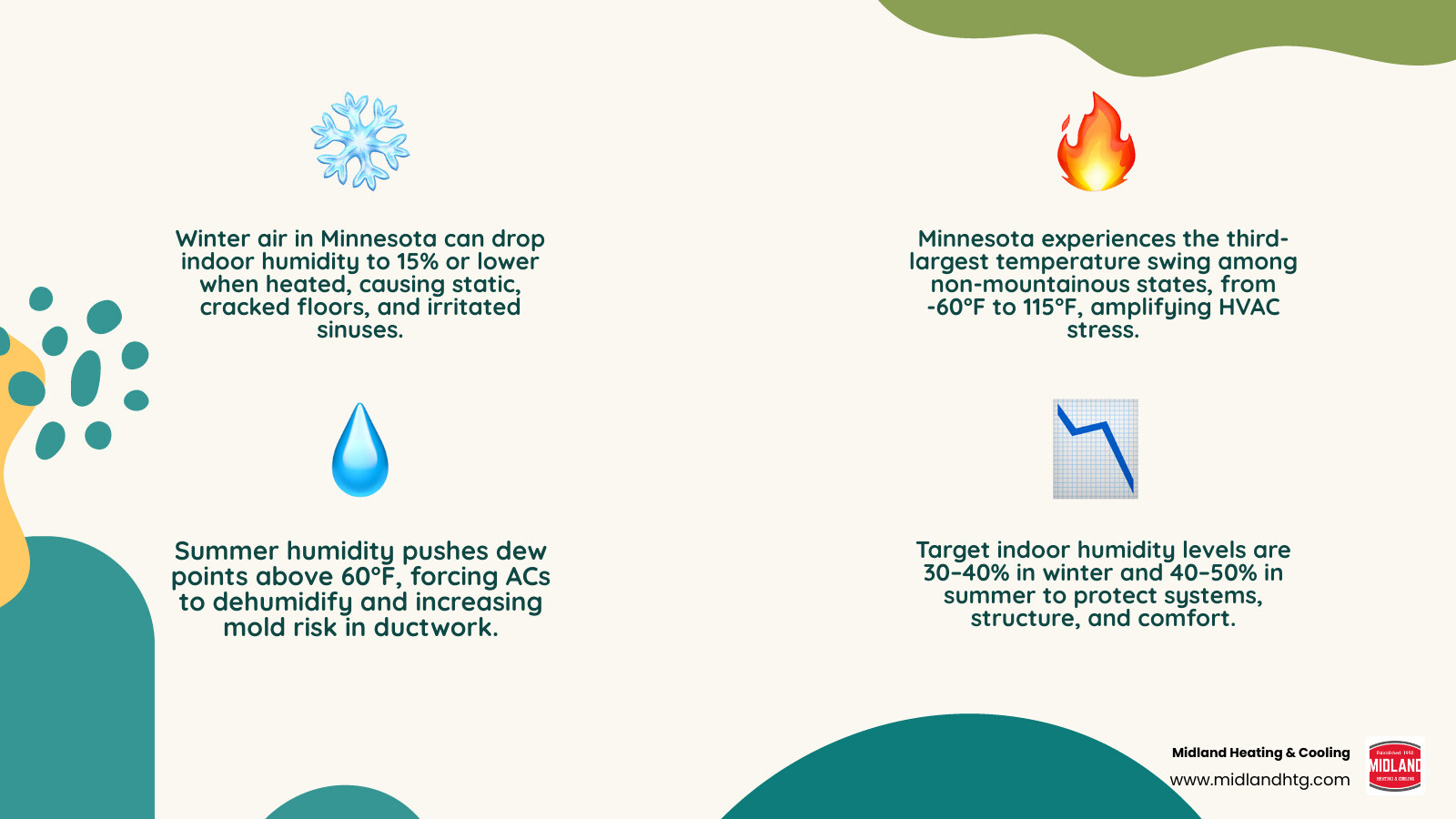
Understanding how Minnesota humidity swings affect your home comfort systems starts with one simple fact: no other non-mountainous state in the country puts heating and cooling equipment through more stress than Minnesota does.
Here is a quick summary of the key effects:
- Winter (target: 30–40% indoor humidity): Bone-dry air causes static electricity, cracked wood floors, irritated sinuses, and forces furnaces to work harder — sometimes triggering short cycling or frozen exhaust vents
- Summer (target: 40–50% indoor humidity): Muggy outdoor air pushes moisture into your home, straining your air conditioner, raising energy bills, and creating conditions where mold can grow inside ductwork
- Year-round: Humidity extremes accelerate wear on HVAC components, shorten system lifespan, and make your home feel uncomfortable even when your thermostat says otherwise
Minnesota’s temperature range spans from -60°F to 115°F — the third-largest swing among non-mountainous U.S. states. That means your furnace and air conditioner are not just dealing with heat and cold. They are constantly battling the moisture levels that come with each extreme.
When winter arrives, cold outdoor air holds almost no moisture. Your furnace heats that air, which drops indoor relative humidity even further — sometimes to 15% or below. Come summer, warm humid air floods in, and your air conditioner has to pull double duty as both a cooling system and a dehumidifier.
If your HVAC system is already aging, these swings can push it past its limits faster than you might expect.
The Science Behind Minnesota’s Extreme Seasonal Humidity Swings
To truly grasp how Minnesota humidity swings affect your home comfort systems, we have to look at the unique climate characteristics of the Upper Midwest. Classified under Climate Zone 6, the Twin Cities region experiences some of the most dramatic atmospheric shifts in North America. Our local weather is characterized by rapid transitions where we might swap heavy winter parkas for light summer clothes in a matter of weeks.
The underlying driver of these comfort challenges is the relationship between air temperature and moisture capacity. Relative humidity (RH) refers to the amount of water vapor present in the air compared to the maximum amount the air can hold at that specific temperature. Warm air is physically expanded, meaning it has a much larger capacity to hold water vapor. Cold air, on the other hand, is contracted and holds very little moisture.
When we talk about the outdoor “dew point” (the temperature at which air becomes saturated with water vapor and dew forms), we are measuring the absolute amount of moisture in the air. In a typical Twin Cities summer, dew points can soar above 60°F or even 70°F, creating a heavy, sticky atmosphere. In the winter, dew points drop below zero. When that cold outdoor air leaks into your home and is heated up to 70°F by your furnace, its relative humidity plummets. Understanding these basic terms is helpful when navigating complex HVAC Terminology and managing your indoor climate.
Winter Dryness vs. Summer Mugginess
During a freezing January in Minneapolis or St. Paul, the air outside is incredibly dry because frozen air simply cannot hold water vapor. When this dry air infiltrates our homes through tiny gaps in windows, doors, and foundations, our heating systems warm it up. This heating process expands the air, causing the relative humidity indoors to drop to desert-like levels—frequently between 15% and 25%. Without active humidification, this extreme dryness pulls moisture out of everything it touches, including your skin, your sinuses, and your home’s wooden structure.
Conversely, July and August bring the opposite problem. Warm, humid air masses move up from the Gulf of Mexico, pushing outdoor relative humidity levels to 70% or 80%. This moisture easily penetrates residential building envelopes.
Basements are particularly vulnerable during a Minnesota summer. Because basement walls are surrounded by cool earth, they remain much colder than the rest of the house. When warm, humid air makes its way downstairs, it cools rapidly upon contacting these cold surfaces. This sudden drop in temperature spikes the local relative humidity, often pushing it past 60% or 70%, which leads to condensation, musty odors, and damp surfaces.
How Minnesota Humidity Swings Affect Your Home Comfort Systems
The sheer scale of these seasonal shifts places immense mechanical stress on your heating, ventilation, and air conditioning equipment. Your HVAC systems do not just run; they endure a constant cycle of thermal expansion and contraction. During extreme cold snaps, furnaces in places like Edina and Minnetonka may cycle 8 to 12 times per hour to keep up with heat loss. In summer, air conditioners run for hours on end to combat both sensible heat (temperature) and latent heat (humidity).
This relentless operational demand accelerates the wear and tear on blower motors, compressors, and heat exchangers. Over time, this mechanical fatigue can shorten the overall lifespan of your equipment. While a well-maintained furnace can last 15 to 20 years and an air conditioner can last 10 to 15 years, ignoring the impact of humidity swings can cause these systems to fail prematurely. Homeowners who want to protect their investments should explore proactive Ways to Maximize HVAC Systems Efficiency to keep their systems running smoothly year-round.
Winter Dryness: How Minnesota Humidity Swings Affect Your Home Comfort Systems in the Cold
When indoor humidity falls below the recommended winter target of 30% to 40%, it triggers a chain reaction of comfort and mechanical issues.
First, dry air accelerates evaporation from your skin, which actually makes you feel colder than the thermostat indicates. This often prompts homeowners to bump up the temperature, forcing the furnace to run longer, consume more energy, and experience more wear.
Additionally, dry air causes significant physical changes inside your home:
- Static Electricity: Low moisture allows static charges to build up easily, leading to unpleasant shocks when touching metal surfaces or electronic devices.
- Wood Damage: Hardwood floors, wooden furniture, trim, and doors lose moisture and shrink, resulting in unsightly gaps, creaks, and cracks.
- HVAC Short Cycling: If air cannot hold heat efficiently due to extreme dryness, it can lead to rapid thermostat fluctuations, causing your furnace to turn on and off too quickly.
- Frozen Exhaust Vents: Modern high-efficiency furnaces (90%+ AFUE) produce an acidic liquid condensate as they extract heat from flue gases. In sub-zero temperatures, if the exhaust vent is not sloped or insulated correctly, this condensate can freeze inside the drain lines or outdoor PVC vents. This blocks the airflow, triggers safety pressure switches, and causes sudden system lockouts in the middle of the night.
To combat these dry-air issues and keep your family comfortable, check out these reliable Ways to Improve Indoor Air Quality during the heating season.
Summer Mugginess: How Minnesota Humidity Swings Affect Your Home Comfort Systems in the Heat
In the summer, the challenge flips entirely. Your air conditioner’s primary job is to cool the air, but it also acts as a large dehumidifier. As warm, damp indoor air is pulled across the cold evaporator coil, moisture condenses out of the air and drips into a condensate pan, where it is drained away.
However, when relative humidity levels consistently hover above the ideal summer target of 40% to 50%, your cooling system has to work twice as hard. The compressor must run longer cycles to extract the latent heat bound up in the airborne moisture before you ever feel a drop in temperature. This extra workload directly translates to inflated energy bills and increased wear on your compressor.
Furthermore, high humidity combined with cooling cycles can cause moisture to pool inside your ductwork. When summer dew points rise above 60°F, the relative humidity inside uninsulated or poorly sealed ducts can easily exceed 70%. This damp, dark environment is the perfect breeding ground for mold and mildew, which can compromise your indoor air quality and spread musty smells throughout your home.
If you want to keep your cooling system running efficiently through the worst of summer’s mugginess, it is vital to understand Why Regular AC Service Crucial for preventing moisture-related breakdowns.
7 Warning Signs Your Aging HVAC System is Struggling with Humidity
If your heating and cooling equipment is starting to show its age, Minnesota’s extreme humidity swings will quickly expose its vulnerabilities. Be on the lookout for these seven warning signs that your system is struggling:
- Uneven Temperatures and Clammy Rooms: You notice that some rooms feel freezing and damp, while others feel warm and stuffy.
- Strange Noises: You hear unusual rattling, squealing, or clicking sounds coming from your furnace or outdoor condenser unit when they start up.
- A Month-Over-Month Energy Bill Spike of 20% or More: If your utility bills jump by more than 20% compared to the previous month without a drastic shift in outdoor weather, your system is losing its efficiency.
- Excessive Dust and Dryness: Despite regular cleaning, your home feels dusty, and you experience dry skin, irritated eyes, or static shocks.
- Frequent Thermostat Adjustments: You find yourself constantly adjusting the thermostat because the indoor air never quite feels comfortable.
- The “Maintenance Gap”: If your system has gone several seasons without a professional inspection, hidden issues like dirty coils or clogged lines are likely compounding your humidity problems.
- Frequent Short Cycling: Your system turns on and off rapidly, failing to run long enough to properly dehumidify the air in summer or distribute heat evenly in winter.
If you are experiencing several of these warning signs, it may be time to consult with a professional about a comprehensive HVAC System Upgrade to restore your year-round comfort.
The Role of Insulation and HVAC Synergy in Moisture Control
Your home comfort systems do not operate in a vacuum; they rely heavily on your home’s building envelope. Insulation acts as a thermal barrier that slows down heat transfer between the interior of your home and the harsh outdoor environment. When your home is properly insulated, it works in perfect harmony with your HVAC system to regulate both temperature and moisture.
According to the U.S. Department of Energy, proper insulation and air sealing can cut heating and cooling costs by 10% to 15% or more annually.
In winter, high-quality attic and wall insulation keeps warm air inside, preventing it from escaping and drawing in cold, dry outdoor air through drafts. This draft reduction helps maintain a stable relative humidity level indoors.
In the summer, insulation blocks outdoor heat from penetrating your living areas, allowing your air conditioner to recover faster and focus its energy on pulling excess humidity out of the air. Furthermore, proper insulation minimizes temperature fluctuations on drywall and plaster, preventing condensation from forming on cold surfaces and protecting your home’s structure from moisture damage.
Whole-Home Solutions: Humidifiers vs. Dehumidifiers for the Twin Cities
To maintain optimal comfort throughout Minnesota’s extreme seasonal transitions, relying solely on standalone heating and cooling units is often not enough. Many homeowners in communities like Bloomington, Eden Prairie, and Wayzata find that investing in dedicated, whole-home air quality systems is the most effective way to balance indoor moisture.
| System Type | Primary Season | How It Works | Key Benefits |
|---|---|---|---|
| Whole-Home Humidifier | Winter | Adds moisture directly into the HVAC ductwork as heated air circulates. | Eliminates static shocks, protects wood floors, and prevents dry skin/sinuses. |
| Whole-Home Dehumidifier | Summer | Pulls moisture out of the air before it is distributed through the vents. | Lowers cooling costs, prevents mold in basements/ducts, and removes clammy feel. |
When it comes to whole-home humidifiers, there are three primary designs to consider:
- Bypass Evaporative Humidifiers: These units divert a portion of the warm air from your furnace through a water-saturated pad. They are highly reliable, cost-effective, and typically output between 12 to 17 gallons per day (GPD).
- Fan-Powered Evaporative Humidifiers: Featuring an internal fan that actively pushes air through the water pad, these systems offer higher output (17 to 25 GPD) and are excellent for mid-to-large-sized homes.
- Steam Humidifiers: These high-performance systems boil water to create steam, which is then injected directly into your ductwork. They offer the highest output (up to 34 GPD) and work independently of whether your furnace is actively heating.
For most single-family homes in the Twin Cities, a whole-home humidification system needs an output of 12 to 18 GPD depending on construction tightness and design temperature. In the summer, a whole-home dehumidifier can extract gallons of water from your indoor air daily, taking a massive load off your air conditioner. To find the perfect setup for your property, check out our guide on Tips for Choosing Right HVAC System.
Seasonal Maintenance Steps for Humidity Control
To ensure your HVAC systems are fully prepared to handle the first major humidity spike of the season, regular maintenance is essential. Taking these proactive steps will prevent unexpected breakdowns and keep your indoor air fresh:
- Replace Your Air Filter: Check your air filter every 30 to 90 days. A clogged filter restricts airflow, which can cause your AC evaporator coil to freeze up during humid summer spells or cause your furnace to overheat in winter.
- Clear Outdoor Condenser Clearance: Keep a two-foot “no-go zone” around your outdoor AC unit. Clear away grass clippings, leaves, and cottonwood debris to ensure proper heat exchange.
- Clear the Condensate Drain Line: Over the summer, algae and dust can clog your AC condensate drain line, leading to water backups and potential flooding in your mechanical room. Flush the line regularly to keep it clear.
- Check Thermostat Batteries: Ensure your thermostat has fresh batteries so it can accurately communicate with your heating and cooling systems. Consider upgrading to a smart model to gain better control over your humidity and temperature schedules.
For more helpful DIY advice, take a look at our Essential AC Maintenance Tips to keep your cooling system in top shape.
Frequently Asked Questions About Minnesota Humidity
What is the ideal indoor humidity for Minnesota homes in the winter?
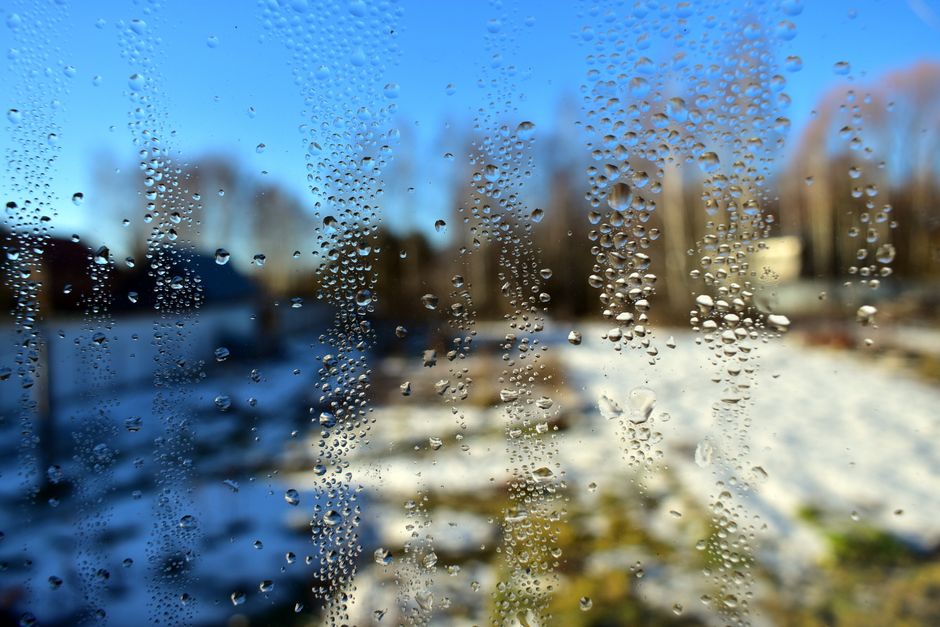
For most Minnesota homes, the ideal winter indoor humidity range is 30% to 40%. Keeping your humidity within this range prevents dry skin and static electricity while ensuring that excess moisture does not condense on cold window glass, which can lead to wood rot, mold growth, and structural damage.
What is the ideal indoor humidity for Minnesota homes in the summer?
The ideal summer indoor humidity range is 40% to 50%. This range keeps your indoor air feeling crisp and comfortable rather than sticky and clammy. It also prevents mold and mildew from taking hold in damp basements or crawl spaces and allows your air conditioner to run highly efficient cooling cycles.
How do I know if my air conditioner is struggling with high humidity?
If your air conditioner is struggling to manage summer humidity, you will likely notice a clammy or sticky feeling indoors, even when the temperature is cool. Other common indicators include musty odors, water stains near your indoor unit, frequent short cycling, or ice forming on the outdoor refrigerant lines or indoor evaporator coil.
Conclusion
Minnesota’s dramatic seasonal humidity swings are undeniably tough on residential HVAC systems. From the bone-dry winter cold snaps in St. Louis Park and Hopkins to the muggy, heavy summer days in Excelsior and Eden Prairie, your heating and cooling equipment works around the clock to keep your family safe and comfortable.
At Midland Heating & Cooling, we have spent more than 70 years helping Twin Cities homeowners navigate these local climate challenges. As a family-owned business, we combine decades of experience with a team of certified technicians dedicated to 100% customer satisfaction. Whether you need to install a whole-home humidifier to combat winter dryness, clear a clogged AC condensate line before a summer heatwave, or upgrade to a more efficient system, we are here to help.
Don’t let the next humidity swing compromise your comfort. Schedule your seasonal HVAC maintenance with Midland Heating & Cooling today to ensure your home remains a cozy, efficient haven all year long.