
Navigating Furnace Performance Drops Before Winter Hits
As pre-season temperature shifts signal the end of autumn, mastering a few essential home maintenance tips and troubleshooting steps can mean the difference between staying comfortable and shivering through the first freeze. A sudden drop in heating performance often causes immediate panic for homeowners, especially when severe winter weather is looming on the horizon. In our years of keeping local homes warm, our team at Midland Heating and Cooling has found that the core challenge is determining whether that lukewarm air coming from the vents is the result of a simple, easily correctable airflow restriction or the first symptom of a complex mechanical failure.
Addressing these performance drops early in the season prevents minor inefficiencies from cascading into total emergency breakdowns. When a heating system runs efficiently, it follows a precise sequence of operations: the thermostat signals the control board, the safety switches verify proper venting, the burners ignite, and the blower motor distributes the warmed air. An interruption at any of these stages results in a cold house. Understanding the basic components of a residential HVAC system empowers you to make informed decisions about your property, allowing you to quickly identify when a problem is a minor quirk and when it requires immediate professional intervention.
Early Warning Signs vs. Sudden Failures
Recognizing the difference between a system that is struggling and a system that has failed is the first step in effective troubleshooting.
| System Symptom | Likely Category | Recommended Initial Action |
|---|---|---|
| Airflow is noticeably weaker than last season | Airflow Restriction | Check and replace the air filter immediately. |
| Furnace runs constantly but house stays cool | Efficiency Drop | Verify thermostat settings and inspect all room vents. |
| Loud banging or grinding noises during startup | Mechanical Failure | Turn off the system and schedule professional diagnostics. |
| System powers on, but burners never ignite | Ignition/Sensor Fault | Stop DIY efforts; requires a licensed technician. |
Safe DIY Home Maintenance Tips and Troubleshooting Steps for Furnaces
Before you assume the worst about your heating system, there are several safe, basic checks you can perform without risking injury or voiding your manufacturer warranty. These foundational steps resolve a surprising number of service calls and should always be your first line of defense.
- Check your thermostat settings: It sounds overly simple, but always verify that the thermostat is explicitly set to the “Heat” position. Additionally, ensure the fan setting is switched to “Auto” rather than “On.” If the fan is set to “On,” the blower will circulate air continuously, even when the furnace burners are off, which can feel like cold air blowing from your vents.
- Replace thermostat batteries: If your thermostat screen is blank, unresponsive, or flashing a low-battery warning, swap out the batteries. A thermostat without adequate power cannot send the necessary voltage signals to the furnace control board to initiate a heating cycle.
- Inspect and replace dirty air filters: A clogged filter is the leading cause of restricted airflow and unexpected system shutdowns. Locate your filter compartment, pull out the filter, and hold it up to a light source. If you cannot see light passing through the material, it is time for a replacement.
- Verify that all household vents are open: Walk through every room in your home and check the supply registers and return grilles. Ensure they are fully open and that no heavy furniture, rugs, or drapes are obstructing the airflow. Closing vents in unused rooms actually disrupts the system’s static pressure and forces the blower motor to work harder.
- Check the home’s electrical panel: Furnaces require electricity to run the blower motor and control boards, even if they use natural gas for heat. Check your main circuit breaker panel to ensure the dedicated furnace switch hasn’t tripped. If it has, reset it once. If it trips again immediately, leave it alone—this indicates a serious electrical short.

Why Air Filters Matter So Much
The importance of routine filter replacements cannot be overstated. Your furnace is designed to move a specific volume of air per minute. When a dirty filter restricts that intake, the system begins to suffocate. This forces the blower motor to work significantly harder, drawing more electricity and increasing your utility bills.
More importantly, restricted airflow prevents the heat exchanger from cooling down properly during operation. As the internal temperature rises beyond safe operational limits, the furnace’s high-limit switch will automatically shut the system down to prevent a fire hazard or a cracked heat exchanger. Regular filter replacements are the easiest, most cost-effective way to prevent these false mechanical alarms and keep your equipment running smoothly.
Identifying Airflow Restrictions vs. Mechanical Failures
Once you have completed the basic checklist, the next step is interpreting the symptoms your system is displaying. Understanding how to categorize these issues neutrally will help you communicate effectively with a technician if a service call becomes necessary.
Airflow issues usually present as a gradual decline in comfort. You might notice weak, anemic air trickling from the vents, or you might find that certain rooms in the house are significantly colder than others. The air coming out may be warm, but there simply isn’t enough of it to satisfy the thermostat. As our technicians often explain, these issues are frequently solved by addressing filter clogs or removing physical obstructions from your ductwork and registers.
Mechanical failures, on the other hand, announce themselves with distinct, unnatural symptoms. If you hear loud banging, squealing from the blower motor, or a rhythmic clicking that never results in ignition, you are dealing with a mechanical breakdown. Another clear indicator is a system that blows entirely cold air while the burner remains off, pointing to a failed ignitor or gas valve issue.
The Short-Cycling Phenomenon
One of the most common issues that bridges the gap between airflow and mechanical problems is short-cycling. This occurs when the furnace turns on for just a minute or two, shuts off prematurely, and then immediately tries to restart. Short-cycling can be caused by a severely clogged filter triggering the safety limit switch, but it can also be caused by a dirty flame sensor that fails to detect the burner’s fire, causing the control board to shut off the gas supply as a safety precaution.
Addressing these efficiency issues before the heavy winter weather arrives is highly recommended. One of our local customers reached out to us during the fall to prepare for the upcoming cold season. They scheduled a routine tune-up, and our technician not only optimized the system for winter efficiency but also provided personalized advice on maintaining proper airflow throughout the home, ensuring the furnace was fully ready for the months ahead. Routine preventative maintenance like this helps maintain manufacturer warranties and significantly extends the lifespan of the equipment.
The Decision Point: When to Stop DIY Efforts
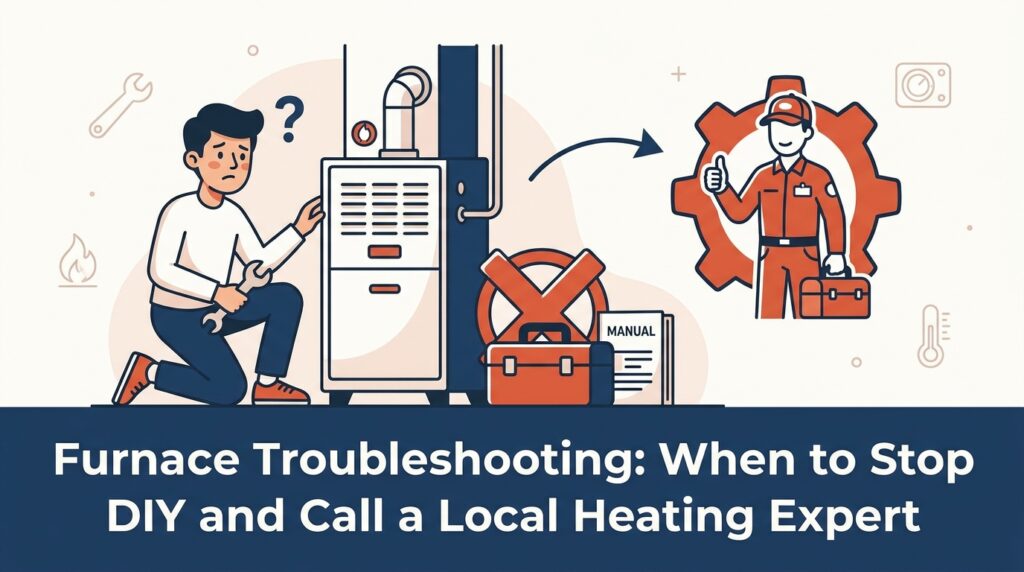
There is a definitive line between proactive home maintenance and dangerous DIY experimentation. Establishing clear, strict boundaries for when to stop troubleshooting is essential for your safety and the longevity of your heating system.
The Problem: You have checked the thermostat, replaced the batteries, installed a brand-new air filter, verified all vents are open, and confirmed the circuit breaker is on. Despite these efforts, the furnace remains completely unresponsive, short-cycles continuously, or blows cold air.
The Cause: At this stage, the root issue is almost certainly an internal mechanical or electrical fault. Modern furnaces are highly complex machines equipped with delicate control boards, specialized draft inducer motors, flame sensors, and pressurized gas valves. A failure in any of these internal components requires specialized diagnostic tools to pinpoint accurately.
The Solution: DIY efforts must stop immediately. Opening the inner furnace cabinet, attempting to bypass safety switches, testing high-voltage electrical components with standard household tools, or adjusting gas pressure valves poses severe safety risks. One mistake can lead to devastating consequences, including electrical shock, structural fire hazards, or the silent release of deadly carbon monoxide gas into your living spaces.
Furthermore, attempting unauthorized internal repairs is the fastest way to instantly void your manufacturer warranty. HVAC manufacturers explicitly state that all internal mechanical and electrical work must be performed by licensed professionals. Recognizing this decision point saves money in the long run and prevents minor, easily repairable sensor issues from being accidentally escalated into catastrophic, system-destroying failures.
Handling Emergency Heating Failures in Severe Cold
When a furnace fails to start during freezing weather, the situation escalates from a minor inconvenience to a serious property and safety emergency. Time becomes the most critical factor. Without a functioning heat source, the thermal envelope of a home loses temperature rapidly. Within hours, interior temperatures can drop to dangerous levels, putting the home’s plumbing infrastructure at severe risk of freezing and bursting, which can cause catastrophic water damage.
With severe sub-freezing winter temperatures common in the Minneapolis region, our team knows firsthand that rapid diagnostic and repair services are a critical safety requirement, not just a luxury. Emergency situations require immediate professional dispatch rather than prolonged DIY guesswork. When the temperature plummets, you cannot afford to spend hours watching online tutorials or taking apart blower assemblies.
Professional technicians possess the specialized diagnostic tools, multimeters, and manometers required to pinpoint the exact point of failure safely and accurately. They carry common replacement parts on their trucks, allowing them to resolve ignition failures, blower motor burnouts, and sensor faults in a single visit. Highlighting local expertise, trusted professionals focus on rapid response and accurate diagnostics to resolve emergency winter heating failures safely.
During a particularly harsh winter stretch, one of our local customers found their furnace completely unresponsive just as a major freeze was forecasted for the next day. We dispatched a technician the same afternoon, quickly diagnosed the root cause of the failure, and restored the heat before the severe weather hit. Our technician then formulated a clear plan to prevent the issue from recurring, ensuring the house remained safe, warm, and protected for the remainder of the season.
What to Look for in a Trusted Local Heating Technician
Once you have reached the limit of safe DIY troubleshooting and made the decision to call for backup, the next step is evaluating and selecting a reliable local HVAC contractor. Not all service providers operate with the same level of integrity and technical expertise, so knowing what to look for is essential.
- Licensing and Certifications: Always verify that the contractor holds the appropriate state and local licenses. Look for industry-standard credentials, such as NATE (North American Technician Excellence) certification, which indicates the technician has passed rigorous, real-world testing in HVAC diagnostics and repair.
- Diagnostic-First Approach: Prioritize contractors who offer transparent, diagnostic-first approaches. A reputable technician will want to thoroughly test the system to find the exact failing component. Be wary of technicians who immediately jump to high-pressure sales tactics or insist on a full system replacement before conducting a comprehensive diagnostic evaluation.
- Local Reputation: When evaluating options for the best furnace repair services in Minneapolis, prioritize contractors with a strong track record of local reviews. Look for feedback that highlights rapid response times, clean workspaces, and a willingness to explain the work being performed in plain language.
- Educational Focus: A reliable technician views themselves as a consultant for your home’s comfort. They will take the time to explain the root cause of the failure, show you the damaged part if possible, and provide actionable advice on long-term heating efficiency and preventative maintenance schedules.
Frequently Asked Questions About Furnace Troubleshooting
How do I troubleshoot my furnace before calling for service?
Start by checking your thermostat to ensure it is set to the heat position and the fan is on auto. Next, inspect your air filter and replace it if it is dirty or clogged, as restricted airflow is a primary cause of system shutdowns. Finally, verify that your household vents are completely open and check your electrical panel to ensure the furnace circuit breaker hasn’t tripped.
When should I call a professional for furnace repair?
You should call a professional immediately if you smell natural gas, hear loud banging or squealing noises, or if your carbon monoxide detectors sound an alarm. Additionally, if you have completed all basic DIY checks like replacing the filter and checking the breaker, but the system still fails to produce heat, it is time to bring in a licensed technician.
Why is my furnace running but not heating?
This frustrating issue is often caused by a severely clogged air filter that prevents warm air from circulating through your ductwork. It can also be caused by a faulty thermostat failing to communicate properly, or a failing internal component like a burner or gas valve that requires professional diagnosis and replacement.
What is the most common reason for a furnace to stop working?
Dirty air filters restricting system airflow is the most common, easily preventable issue that causes furnaces to stop working. When airflow is blocked, the internal heat exchanger overheats, triggering the system’s high-limit safety switch to shut the entire unit down to prevent a fire hazard.
Will attempting my own repairs void my furnace warranty?
Yes, most HVAC manufacturers include strict clauses requiring that any internal mechanical or electrical repairs be performed by a licensed HVAC professional. Opening the cabinet to splice wires, replace sensors, or adjust gas valves on your own will almost certainly void the warranty, leaving you responsible for the full cost of future part replacements.
Secure Your Home’s Comfort With Professional Diagnostics
As we frequently remind our customers, a clear understanding of exact system symptoms and safe troubleshooting steps empowers you to manage your home maintenance tips and troubleshooting with confidence. Knowing the definitive triggers for a professional service call prevents unnecessary safety risks and ensures the long-term health of your heating equipment. When in doubt, relying on a trusted local expert guarantees accurate diagnostics, protecting your investment and ensuring your home remains safe and consistently comfortable all winter long.