

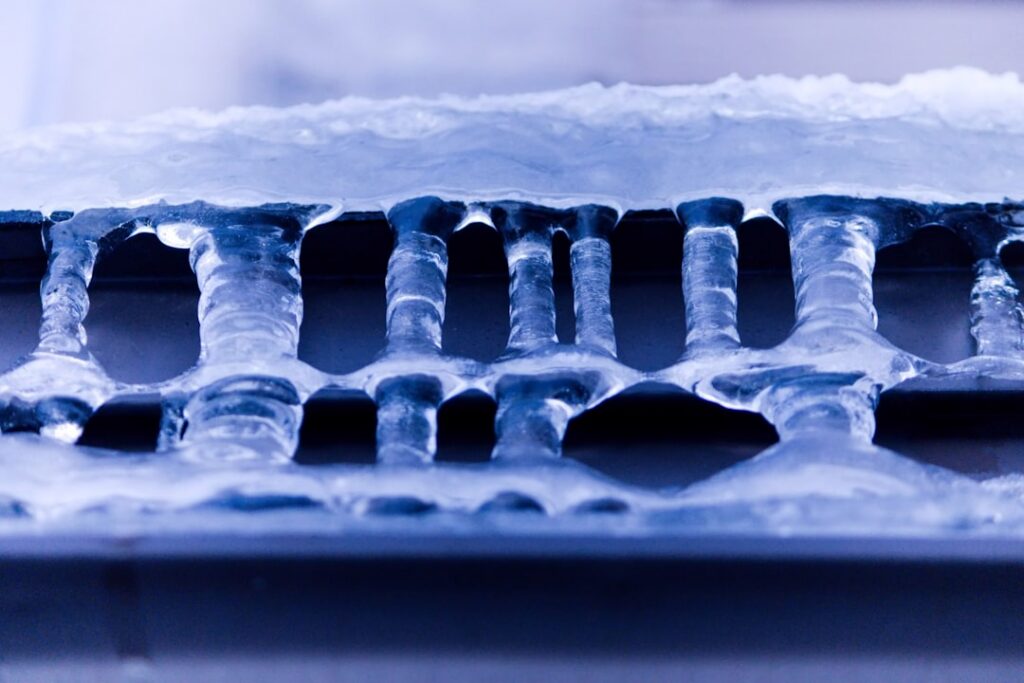
What a Frozen Evaporator Coil Means for Your Home — and What to Do Right Now
If you’re dealing with a frozen evaporator coil, what causes it and what to do about it are probably the two most urgent questions on your mind right now. Here’s the short answer:
Most common causes of a frozen evaporator coil:
- Dirty air filter — restricts airflow over the coil, causing temperature to drop below freezing
- Blocked or closed return vents — same effect as a clogged filter
- Low refrigerant from a leak — drops coil pressure and temperature until moisture freezes on contact
- Dirty evaporator coil — insulates the coil and prevents proper heat exchange
- Faulty blower motor or thermostat — reduces airflow or causes the system to run too long
What to do immediately:
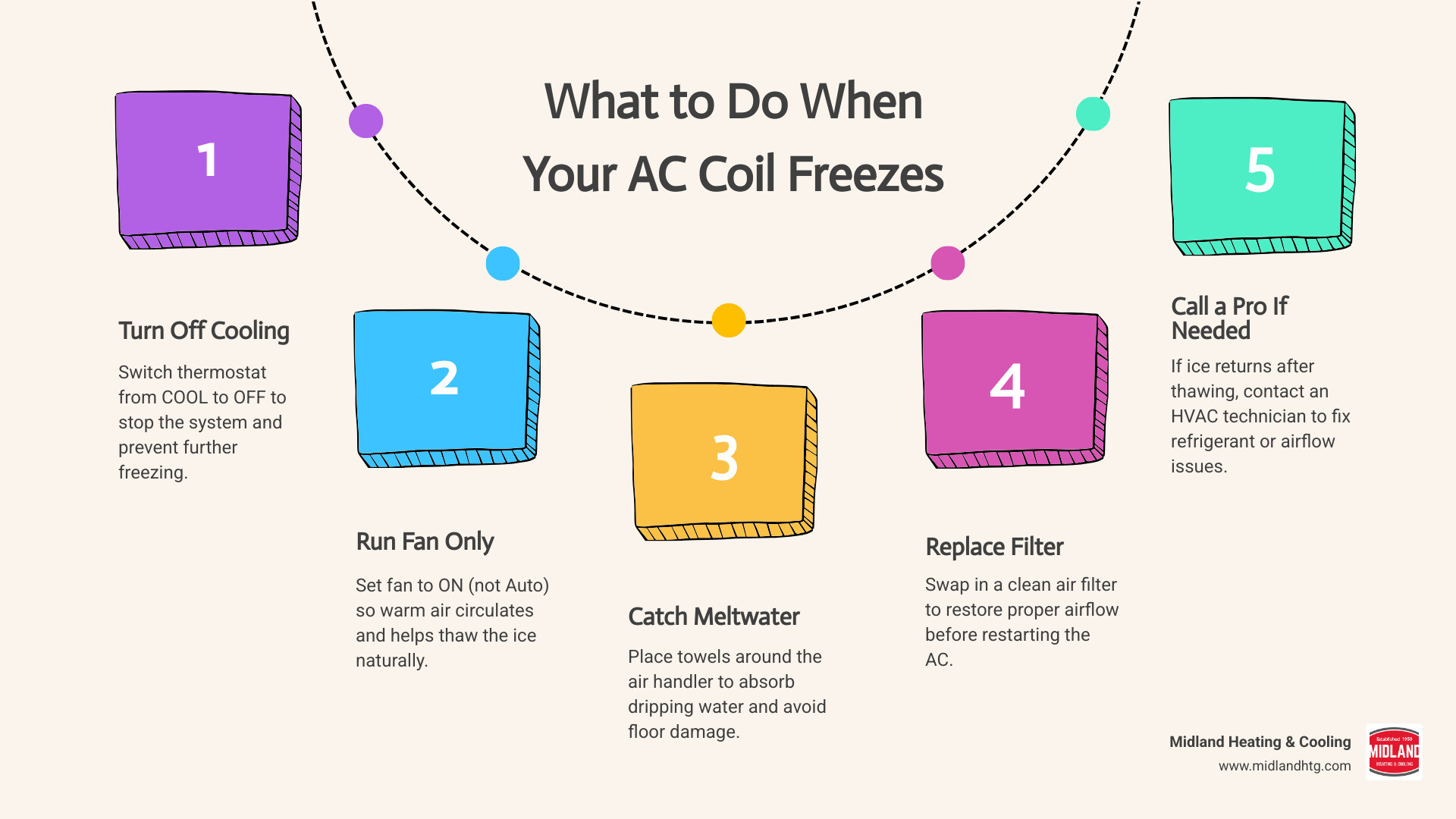
- Turn your thermostat from COOL to OFF
- Set the fan to ON (not Auto) to help thaw the coil
- Place towels around the air handler to catch meltwater
- Do not chip the ice — you can puncture refrigerant lines
- Replace your air filter before restarting the system
- If the coil refreezes after thawing, call an HVAC technician
It’s a strange sight in the middle of a Twin Cities summer — your AC is running, but instead of cool air, you’re getting warm air from the vents, or almost nothing at all. You check the unit and find ice. Actual ice. In June.
This is one of the most common AC problems homeowners face, and it almost always comes down to one of two things: not enough airflow reaching the evaporator coil, or not enough refrigerant moving through it. Either way, the result is a coil that gets too cold, causes moisture in the air to freeze on contact, and steadily shuts down your home’s cooling. Left unchecked, it can destroy your compressor — one of the most expensive components in your entire system.
The good news is that many frozen coil situations are fixable with a few simple steps. This guide walks you through every cause, every solution, and exactly when to call a professional before the problem gets worse.
Frozen evaporator coil what causes it and what to do definitions:
- ac keeps turning on and off repeatedly what is wrong
- ac not cooling but running what to check first
- ac troubleshooting before calling a pro
What is an Evaporator Coil and How Does It Work?
To understand why your air conditioner has transformed into a mini-glacier, it helps to know what the evaporator coil actually does. Located inside your indoor air handler (often paired with your furnace in Minnesota homes), the evaporator coil is where the actual cooling of your indoor air takes place.
Your air conditioning system doesn’t actually “create” cold air; instead, it removes heat from the air inside your home. It does this using a chemical blend called refrigerant. The refrigerant enters the evaporator coil as a cold, low-pressure liquid. As your indoor blower fan pushes warm, humid house air across the cold copper or aluminum fins of the coil, a brilliant exchange occurs:
- Heat Absorption: The cold refrigerant absorbs heat from your indoor air, turning the liquid refrigerant into a warm gas.
- Dehumidification: As the warm air cools down, it loses its ability to hold moisture. This water vapor condenses on the cold surface of the coil and drips down into a condensate drain pan.
- Cool Air Distribution: The newly cooled, dehumidified air is pushed back into your living spaces through your supply vents.
If anything disrupts this delicate thermal balance, the moisture condensing on your coil will drop below 32°F and turn to ice. When that happens, you’ll quickly notice Why AC Is Not Cooling Properly and your home’s comfort will rapidly decline.
Frozen Evaporator Coil: What Causes It and What to Do
When you discover ice on your air conditioner, the root cause is almost always a drop in the coil’s temperature below the freezing point. This drop occurs due to one of two primary system imbalances: a lack of warm air moving over the coil (airflow restriction) or a drop in the refrigerant’s operating pressure.
| Issue Type | Primary Cause | What Happens to the Coil | Common Symptoms |
|---|---|---|---|
| Airflow Issues | Clogged filters, blocked vents, dirty coils, or a bad blower motor | The coil is starved of warm household air, preventing heat exchange. The cold refrigerant causes condensation to freeze on the metal fins. | Weak airflow from vents, warm air blowing, ice forming evenly across the entire indoor coil. |
| Refrigerant Issues | Refrigerant leaks or improper system charge | Low refrigerant levels drop the pressure inside the coil. This lowers the boiling point of the refrigerant, causing the coil to run below 32°F. | Hissing or bubbling noises, ice starting on only half of the coil, AC running constantly without cooling. |
Both scenarios lead to a rapid accumulation of ice. As the ice layer thickens, it acts as an insulator, making it even harder for the coil to absorb heat. This creates a feedback loop that worsens the freeze-up until the system is shut down. Understanding this cycle is the first step to resolving an AC Freezing Up During Hot Summer Days.
Airflow Restrictions: The Primary Frozen Evaporator Coil What Causes It and What to Do Factor
The single most common reason evaporator coils freeze is restricted airflow. Your air conditioner needs a steady, high-volume stream of warm indoor air flowing across the evaporator coil to keep the refrigerant inside warm enough to stay above freezing. When that airflow is restricted, the temperature of the coil drops below 32°F, and the natural condensation on the coil freezes instantly.
Here are the primary culprits behind restricted airflow:
- A Dirty Air Filter: This is the number-one cause of frozen coils. When your air filter is clogged with dust, pet dander, and hair, it acts like a wall, preventing the blower fan from pulling enough air through the system.
- Blocked Return Vents: If you have rearranged your furniture and placed a couch, rug, or bookcase directly in front of your return grilles, you are starving your AC of air.
- Closed Supply Registers: Homeowners sometimes close vents in unused rooms to save energy. However, this disrupts the system’s static pressure, reduces overall airflow, and can easily cause the evaporator coil to freeze.
- Debris Build-Up: Dirt, dust, and pollen can bypass cheap filters and accumulate directly on the coil fins, creating a physical barrier to both airflow and heat transfer.
Before assuming you have a major mechanical failure, check these basic airflow components using our Home AC Troubleshooting Guide What to Check Before Calling HVAC.
Refrigerant Leaks: Another Frozen Evaporator Coil What Causes It and What to Do Culprit
If your airflow is perfectly fine but your system is still freezing up, the next most likely culprit is a refrigerant leak. There is a common misconception that air conditioners “consume” refrigerant over time. In reality, an AC is a sealed system; the only way to be low on refrigerant is if there is a leak or if the system was charged incorrectly during installation.
When refrigerant leaks out of the copper tubing, the overall pressure inside the evaporator coil drops. According to the laws of thermodynamics, lower pressure means a lower boiling point. The remaining refrigerant expansion occurs at a much colder temperature — well below 32°F. Any moisture in the air that touches this super-chilled coil freezes instantly.

Over time, environmental factors like formicary corrosion (a chemical reaction caused by volatile organic compounds in home air that eats away at copper tubing) can cause microscopic pinhole leaks. If you suspect your system is low, you should check out how to Address Low Refrigerant Issues in AC System and learn the physical Signs AC Refrigerant Needs Inspection before your compressor sustains permanent damage.
Other Common Causes of Frozen Coils
While airflow restrictions and refrigerant leaks make up the vast majority of cases, a few other mechanical and electrical issues can lead to frozen coils:
- A Dirty Evaporator Coil: Even with decent airflow, a thick layer of dust on the coil’s metal fins acts as an insulating blanket. The refrigerant cannot absorb heat from the air because of the dirt barrier, causing the coil temperature to drop until it freezes.
- A Failing Blower Motor: If the blower motor’s capacitor is failing or the motor itself is burning out, the fan won’t spin at the correct speed (or might not spin at all). Without the fan forcing air over the coil, a freeze-up is inevitable.
- A Malfunctioning Thermostat: If your thermostat is miscalibrated, has a bad sensor, or suffers from a stuck relay, it may tell your outdoor condenser unit to run continuously overnight. When outdoor temperatures drop during cool summer nights, the lack of a heavy heat load inside the house combined with continuous operation can trigger a freeze.
When these mechanical issues strike, you will likely notice your AC Running Constantly Without Cooling Properly, signaling that it’s time to shut down the unit and investigate.
What to Do Immediately When You Spot Frozen Coils
If you walk downstairs to your basement or utility closet and see a block of ice encasing your indoor unit, you must act immediately to protect your equipment.
- Turn Off the Cooling Immediately: Go to your thermostat and switch the system from COOL to OFF. Running the system in cooling mode while frozen will not melt the ice and will put immense strain on your compressor.
- Turn the Fan to ON: Switch your fan setting from AUTO to ON. This keeps your indoor blower fan running constantly, forcing warm household air over the frozen coil to accelerate the melting process safely.
- Prepare for Water: As the ice thaws, it will produce a significant amount of water. If your condensate drain line is partially blocked or can’t handle the rapid melt, water can overflow the drain pan. Place towels around the base of your air handler to protect your floors and drywall.
- Check Your Air Filter: While the system is thawing, slide out your air filter. If it is grey, dusty, or completely clogged, replace it with a fresh one immediately.
If your home is still uncomfortably warm during this process, consult The My House Is Still Hot AC Troubleshooting Guide for temporary comfort tips while your system defrosts.
Why You Should Never Run Your AC with Frozen Coils
It can be incredibly tempting to keep running your air conditioner on a hot afternoon, hoping that a little bit of cool air is better than nothing. However, operating an AC with a frozen evaporator coil is a recipe for catastrophic system failure.
The primary danger is a phenomenon called liquid slugging. Your air conditioner’s compressor is designed to compress gas, not liquid. Under normal operation, liquid refrigerant absorbs heat in the evaporator coil and boils into a gas before returning to the compressor.
When the coil is frozen, no heat transfer occurs. This means the refrigerant remains a cold liquid. If this liquid refrigerant flows back into the compressor, it can destroy the internal pistons, valves, and electrical components. Replacing a compressor is incredibly expensive and often means you’ll need to replace the entire outdoor unit.
Additionally, a frozen system works twice as hard to do no work at all, leading to skyrocketing energy bills and unusual mechanical stress. If you hear screeching, buzzing, or clicking, refer to our guide on What to Do When AC Makes Strange Noises to identify potential damage.
How to Safely Defrost Your AC Coils
Defrosting your air conditioner requires patience. While you want your home cool again as quickly as possible, rushing the process can cause permanent damage to your HVAC system.
- The Safe Method: The absolute safest way to thaw your evaporator coil is to turn the system OFF at the thermostat and set the fan to ON. This uses your home’s natural ambient warmth to melt the ice gradually. Depending on the severity of the ice buildup, this process typically takes between 1 and 4 hours.
- What NOT to Do:
- Never chip or scrape the ice: Do not use screwdrivers, knives, or ice picks to break up the ice on your coil. The copper or aluminum tubing inside the coil is incredibly thin and easily punctured. A single slip can ruin your coil and release all your refrigerant.
- Never use high heat: Avoid using high-heat heat guns or blow torches to melt the ice. Extreme heat can melt the solder joints connecting your refrigerant lines, crack the drain pan, or warp the aluminum fins.
How to Prevent Frozen Evaporator Coils in the Future
The best way to handle a frozen evaporator coil is to prevent it from happening in the first place. Fortunately, keeping your cooling system running smoothly throughout our steamy Twin Cities summers only requires a few simple, proactive habits.
- Change Your Air Filter Regularly: Mark your calendar to check your air filter every 30 days during the peak summer cooling season. If you have pets or suffer from allergies, you may need to replace it more frequently.
- Keep Your Vents Open and Clear: Ensure that at least 80% of your home’s supply registers are fully open, and never block your large return air grilles with furniture, drapes, or storage boxes.
- Schedule Spring Maintenance: Having a professional inspect your system before the summer heat hits is the single best way to catch minor issues — like small refrigerant leaks or dirty coils — before they turn into major freeze-ups.
For a complete checklist on keeping your system in peak condition, explore our Essential AC Maintenance Tips and learn how to Prevent AC Problems Before Summer Arrives.
Frequently Asked Questions About Frozen AC Coils
How long does it take for a frozen AC coil to thaw?
Depending on how thick the ice buildup is, a frozen evaporator coil will typically take 1 to 4 hours to thaw completely if you turn the system off and run the indoor fan on the “ON” setting. In extreme cases where the entire air handler is encased in a solid block of ice, it may take overnight to fully defrost.
What other HVAC issues mimic the symptoms of frozen coils?
A clogged condensate drain line can mimic a frozen coil by causing water to pool around your air handler, though it won’t stop your AC from blowing cold air. A failing blower motor or a bad thermostatic expansion valve (TXV) can also mimic a freeze-up by severely reducing your system’s cooling capacity and causing the AC to run constantly.
Will a frozen AC unit fix itself?
No. While the ice will eventually melt if you turn the system off or if the outdoor temperature drops, the underlying cause will not fix itself. If you do not resolve the airflow restriction or repair the refrigerant leak, the evaporator coil will simply freeze over again within a few hours of turning the cooling back on.
Conclusion
A frozen evaporator coil is a clear warning sign that your air conditioning system is struggling. Whether it’s a simple airflow restriction caused by a forgotten air filter or a more complex refrigerant leak deep within your system’s copper coils, ignoring the problem can lead to expensive compressor damage and hot, sleepless summer nights.
If you have allowed your system to thaw completely, replaced your air filter, opened all your vents, and your air conditioner still freezes up when you turn it back on, it is time to call in the experts.
At Midland Heating & Cooling, we have been serving homeowners across the Twin Cities — from Minneapolis and St. Paul to Edina, Bloomington, Minnetonka, and beyond — for over 70 years. Our certified, family-owned team is dedicated to keeping your home comfortable all summer long. Schedule professional HVAC service in Minneapolis with us today, and we’ll get your cooling system running safely, efficiently, and ice-free!