

Why Learning How to Clean AC Condenser Coils Between Professional Visits Saves You Money and Headaches
Knowing how to clean AC condenser coils between professional visits can be the difference between a system that runs smoothly all summer and one that breaks down on the hottest day of the year. For Twin Cities homeowners, that’s not a gamble worth taking.
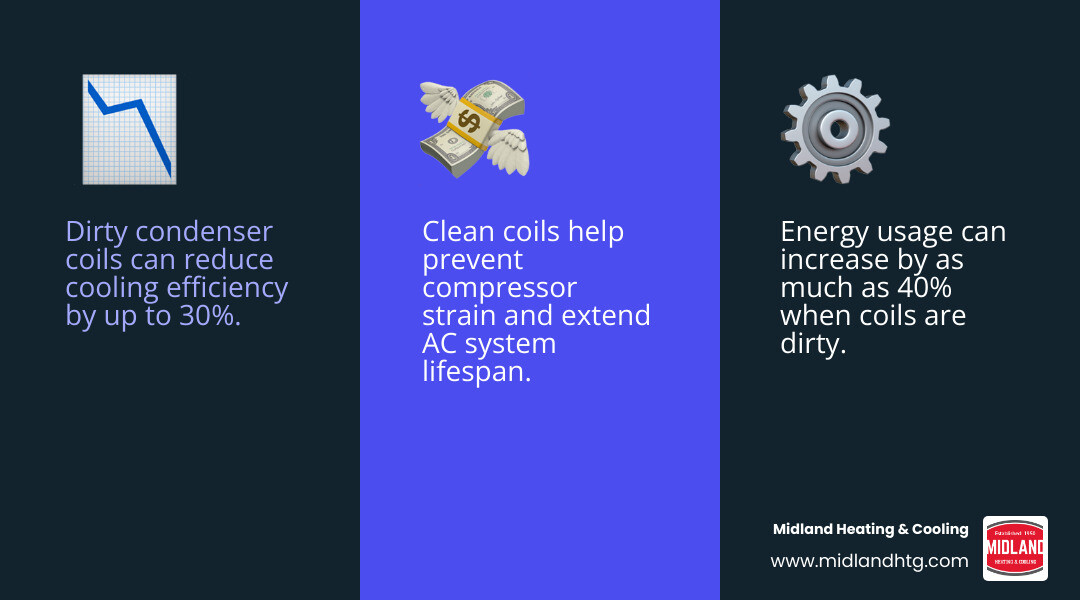
Dirty condenser coils are one of the most common — and most overlooked — causes of poor AC performance. Research shows they can reduce cooling efficiency by up to 30% and drive energy usage up by as much as 40%. Over time, that adds up to higher utility bills, unnecessary strain on your compressor, and a shorter system lifespan.
The good news? You don’t have to wait for your next professional tune-up to take action. Here’s a quick overview of how to clean your condenser coils safely at home:
- Shut off power to the outdoor unit at the disconnect box or breaker
- Clear debris — leaves, grass, and dirt — from around and inside the unit
- Remove the outer panel and apply a foaming coil cleaner
- Rinse gently with a garden hose on a low-pressure setting
- Reassemble and restore power once the unit is dry
Prevent AC Problems Before Summer Arrives
This guide from Midland Heating & Cooling walks you through each of those steps in detail — plus what tools you’ll need, mistakes to avoid, and when it’s time to call a pro instead.
The Importance of Knowing How to Clean AC Condenser Coils Between Professional Visits
To understand why keeping these coils clean is so critical, it helps to understand how your air conditioning system works. Your AC doesn’t actually “create” cold air; instead, it absorbs heat from inside your home and dumps it outside.
This heat transfer relies on two main components: the indoor evaporator coil (which absorbs heat) and the outdoor condenser coil (which releases it).

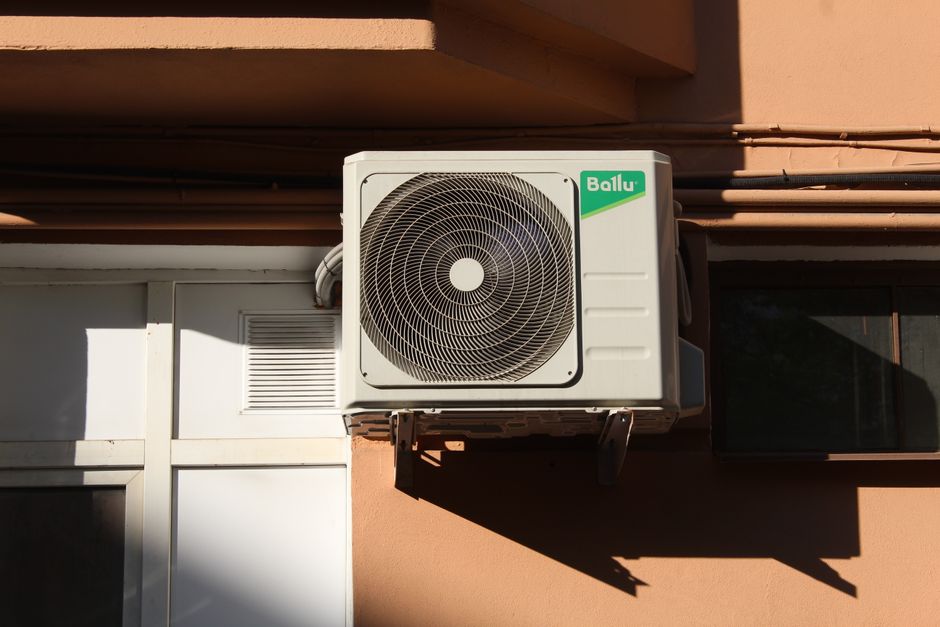
The outdoor condenser coil is wrapped in hundreds of thin, delicate aluminum fins designed to maximize surface area and speed up heat release. Because this unit sits outside year-round, it acts like a giant vacuum for outdoor debris. Dust, dirt, grass clippings, spiderwebs, and falling leaves quickly accumulate on these fins.
When a layer of grime covers the aluminum fins, it acts as an insulating blanket. The heat trapped inside the copper refrigerant tubes cannot escape efficiently into the surrounding air. This blockage triggers a damaging chain reaction:
- Compressor Stress: The compressor has to run much hotter and work significantly harder to pump refrigerant through the system. The compressor is the most expensive component in your air conditioner; running it under constant strain dramatically shortens its lifespan.
- Spiking Energy Bills: Because heat transfer is restricted, your system must run longer, more frequent cycles to cool your home, driving up your monthly electricity bills.
- Reduced System Lifespan: Operating with heavily neglected coils can cut your air conditioner’s overall lifespan by up to 50%.
While a professional deep clean is a core part of your annual preventative maintenance, performing light, routine cleanings yourself keeps your system running at peak performance all summer long.
Why Regular AC Service Crucial
How Often to Clean AC Condenser Coils Between Professional Visits
As a general rule of thumb, homeowners should inspect their outdoor AC unit monthly during the cooling season and perform a light DIY cleaning at least once or twice a year. However, the ideal frequency depends heavily on your immediate environment:
- High-Pollen and Cottonwood Areas: If you live in a neighborhood with mature trees — especially cottonwood trees, which are incredibly common across Minneapolis, St. Paul, and suburbs like Edina and Minnetonka — you may need to clean your coils more frequently. Cottonwood seeds act like a thick, felt-like blanket that can clog a condenser coil in a matter of weeks.
- Yard Layout and Landscaping: If your outdoor unit is located near a gravel driveway, a dog run, or garden beds with loose mulch, dirt and dust will accumulate much faster.
- Mowing Habits: If you or your landscaping service mow the lawn so that grass clippings discharge directly toward the AC unit, those wet clippings will stick to the damp coils and bake on under the summer sun, necessitating immediate cleaning.
For the best results, we recommend making a quick inspection part of your monthly home checklist, especially during peak summer use in June, July, and August.
Signs Your Condenser Coils Need Cleaning
You don’t always have to guess when your coils are dirty. Your air conditioner will usually drop hints that it is struggling to breathe. Look out for these common warning signs:
- The AC Runs Constantly: If your system is running unusually long cycles or never seems to turn off, even on moderately warm days, clogged coils are likely preventing efficient heat release.
- Warm Air From Vents: If the air blowing out of your supply registers feels lukewarm or room-temperature, the system is failing to complete its heat-exchange cycle.
- Unusually High Utility Bills: A sudden, unexplained spike in your summer electric bill is a classic sign of an overworked, dirty condenser.
- Visible Grime on the Unit: If you walk outside and see a gray, fuzzy layer of dust, pet hair, or lawn debris plastered against the metal fins, your coils are long overdue for a rinse.
- Ice on the Refrigerant Lines: When heat transfer is severely restricted, the indoor evaporator coil can freeze over, causing ice to travel down the copper refrigerant lines all the way to the outdoor unit.
Home AC Troubleshooting Guide What to Check Before Calling HVAC
Preparation and Tools for Safe DIY Coil Cleaning
Before you begin, gathering the right tools will ensure you complete the job safely and effectively without damaging your equipment. Fortunately, you don’t need highly specialized commercial gear to keep your coils in great shape between professional visits.
Here is your essential DIY AC coil cleaning kit:
- Eye Protection & Work Gloves: Protect your eyes from flying debris and chemical splashes, and protect your hands from the razor-sharp edges of the aluminum fins.
- Screwdriver or Nut Driver: Usually a 1/4″ or 5/16″ size, needed to remove the protective grilles or top panel of your condenser unit.
- Foaming Coil Cleaner: Look for a non-acidic, self-rinsing, or water-rinse foaming cleaner specifically formulated for outdoor AC units. Avoid harsh household cleaners.
- Garden Hose with Spray Nozzle: A standard hose with an adjustable nozzle is perfect. Never use a pressure washer.
- Soft-Bristle Brush: A soft nylon brush, a fin brush, or even a clean paintbrush is helpful for gently sweeping away loose surface dust.
- Fin Comb: A small, inexpensive tool used to straighten bent aluminum fins and restore proper airflow.
- Shop Vacuum (Optional): Highly useful for clearing out leaves and dirt that have settled in the bottom pan of the condenser unit.
The 5-Step DIY Condenser Coil Cleaning Guide
Now that you have your tools ready and understand why this maintenance is so important, let’s dive into the step-by-step process of cleaning your condenser unit safely.
Step-by-Step: How to Clean AC Condenser Coils Between Professional Visits Safely
Follow these five simple steps to give your outdoor AC unit a thorough, safe clean:
Step 1: Shut Off the Power (Completely!)
Safety is the absolute priority when working around electrical HVAC equipment. Do not simply turn off the thermostat inside your home. Instead, locate the outdoor electrical disconnect box, which is typically mounted on the house wall within a few feet of the condenser unit.
Open the metal box and look for a pull-out plug, a large switch, or a circuit breaker. Pull the plug out or flip the switch to the “OFF” position. For an extra layer of safety, head inside to your home’s main electrical panel and turn off the breaker labeled for your air conditioner.
Step 2: Clear Away Debris and Create Breathing Room
Before opening the unit, clear the area surrounding it. Trim back bushes, weeds, and branches to maintain at least 2 to 3 feet of clear space around the entire condenser. This ensures maximum airflow.
Next, use your hands or a soft brush to sweep away loose leaves, twigs, and grass clippings from the exterior grilles. If your unit allows easy access, use your screwdriver or nut driver to carefully remove the top panel or protective grilles. Once inside, use your shop vac to suction out any dead leaves, dirt, or debris that have collected in the bottom pan of the unit.
Step 3: Apply the Foaming Coil Cleaner
Shake your can of non-acidic foaming coil cleaner and spray it evenly onto the exterior coils. Work your way from the bottom of the unit to the top, ensuring the foam gets deep into the spaces between the aluminum fins.
As the foam sits, it will expand and actively loosen dirt, pollen, and grease. Let the cleaner sit for 5 to 10 minutes (or according to the specific directions on the product label). You will see the foam begin to dissolve, carrying the trapped grime down with it.
Step 4: Rinse Gently with a Garden Hose
Using your garden hose equipped with a multi-spray nozzle, select a gentle setting like “shower” or “fan.” Do not use a high-pressure jet stream.
If you have removed the top panel and fan assembly, spray the coils from the inside out. This pushes the dirt outward, the opposite direction from how it was sucked in, making it much easier to flush away. If you cannot access the inside, spray the exterior coils from top to bottom, keeping the hose nozzle at a slight downward angle. Rinse thoroughly until the water running out of the bottom of the unit is completely clear.
Step 5: Straighten Bent Fins, Reassemble, and Restore Power
Inspect the aluminum fins for any bent areas. Bent fins block vital airflow and reduce your system’s efficiency. Carefully run a fin comb (matched to your unit’s specific fin count, usually measured in fins per inch) through the damaged areas to straighten them out.
Once finished, reinstall any grilles or panels you removed, tightening the screws hand-tight to avoid stripping the sheet metal. Allow the unit to air-dry completely. Once dry, plug the outdoor disconnect back in, flip the indoor breaker back on, and set your thermostat to cool to test the system.
Air Conditioning Preventative Maintenance Minneapolis MN
Common Mistakes to Avoid During DIY Cleaning
While cleaning your AC coils is a highly manageable DIY task, making a simple mistake can lead to expensive repairs. Keep these common pitfalls in mind:
| What to Do (Safe Practice) | What to Avoid (Unsafe Practice) | Why It Matters |
|---|---|---|
| Use a standard garden hose on a gentle shower or fan setting. | Never use a pressure washer. | High-pressure water will instantly flatten and destroy the delicate aluminum fins, permanently restricting airflow. |
| Use commercial, non-acidic foaming coil cleaners formulated for HVAC systems. | Avoid household chemicals like bleach, vinegar, or heavy degreasers. | Harsh chemicals can corrode the copper tubing and aluminum fins, leading to catastrophic refrigerant leaks. |
| Brush parallel to the fins (vertically) using a soft-bristle brush. | Do not scrub horizontally or use stiff wire brushes or scrubbing pads. | Horizontal scrubbing or abrasive materials will bend the fins and strip away protective coatings. |
| Keep water directed at the coils and avoid spraying the electrical control box directly. | Do not soak electrical panels or wire connections. | While outdoor units are designed to withstand rain, spraying high-pressure water directly into electrical boxes can short-circuit the system. |
When to Call a Professional HVAC Technician
While routine surface cleaning is highly beneficial, there are times when DIY efforts aren’t enough, and continuing on your own could damage your system. You should step back and call a certified HVAC technician if you encounter any of the following:
- Multiple Rows of Coils: Many modern, high-efficiency air conditioners use double-row or multi-row coil designs. Dirt often gets trapped deep between these layers. Cleaning them safely requires specialized professional tools and complete disassembly of the cabinet.
- Refrigerant Leaks: If you notice a greasy, oily residue on the coils, or if you spot ice forming on the copper lines even after a thorough cleaning, you may have a refrigerant leak. Handling refrigerant requires EPA certification.
- Heavy Corrosion or Damage: If the aluminum fins are crumbling, severely corroded, or heavily damaged by pet urine, the coil may need to be professionally treated or replaced.
- Electrical Issues: If the unit fails to turn back on, makes unusual clicking or buzzing sounds, or trips your home’s circuit breaker immediately after cleaning, call a professional to inspect the electrical components.
AC Tune Up Minneapolis
Frequently Asked Questions About AC Coil Cleaning
To help you feel completely confident in caring for your system, here are answers to some of the most common questions we receive from homeowners in the Twin Cities.
Can I use a pressure washer to clean my AC coils?
No, you should never use a pressure washer on your air conditioner’s condenser coils. The aluminum fins that wrap around the copper tubing are incredibly thin and delicate. Even a low-end pressure washer can easily bend, flatten, or tear these fins, completely blocking airflow and requiring costly professional repairs or a full coil replacement. A standard garden hose with a gentle spray nozzle is more than powerful enough to flush away dirt and grime safely.
Will cleaning my condenser coils lower my energy bills?
Yes, absolutely. When your condenser coils are clean, heat transfer happens quickly and efficiently. This allows your air conditioner to cool your home in shorter cycles, reducing the amount of electricity your compressor draws. According to the U.S. Department of Energy, keeping your coils clean can reduce your cooling system’s energy consumption by up to 30%, leading to noticeable savings on your monthly utility bills.
What is the difference between evaporator and condenser coils?
Your air conditioning system relies on two distinct types of coils that work together to cool your home:
- The Evaporator Coil (Indoor): Located inside your home, typically mounted above your furnace or inside your air handler. Cold refrigerant flows through this coil, absorbing heat and moisture from your indoor air as it blows across the fins.
- The Condenser Coil (Outdoor): Located in your outdoor unit. The heat absorbed indoors is compressed and pumped out to this coil, where the outdoor fan blows air across the fins to release the heat into the outside atmosphere.
Because the indoor evaporator coil is difficult to access and highly delicate, cleaning it should always be left to a professional HVAC technician.
Conclusion
Taking the time to learn how to clean AC condenser coils between professional visits is one of the smartest, highest-ROI maintenance steps you can take as a homeowner. By keeping your outdoor unit clear of dirt, leaves, and cottonwood seeds, you’ll enjoy a cooler home, lower monthly energy bills, and a system that lasts for years to come.
However, DIY cleaning is meant to supplement — not replace — professional annual maintenance. A certified technician does far more than rinse off dust; we inspect electrical connections, measure refrigerant levels, test safety controls, and perform the deep, multi-row coil cleaning that keeps your manufacturer’s warranty fully protected.
If you live in Minneapolis, St. Paul, Bloomington, Edina, or any of our surrounding Twin Cities communities, the team at Midland Heating & Cooling is here to help. With over 70 years of local, family-owned service, our certified technicians are dedicated to keeping your home comfortable in every season.
AC Maintenance Services