

What Snow and Ice Actually Do to Your Outdoor AC Unit Over Winter
Understanding how snow and ice affect outdoor ac unit condition over winter is something every Twin Cities homeowner should get ahead of — because the damage often happens quietly, long before you turn the unit back on in spring.
Here’s a quick summary of the main risks:
| Winter Threat | What It Does to Your AC Unit |
|---|---|
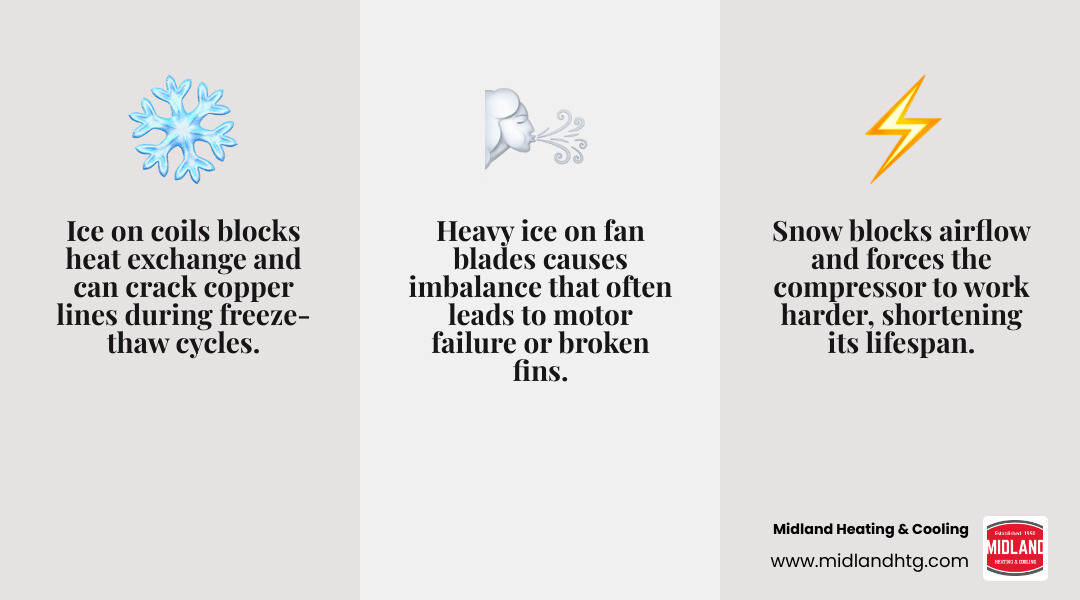
| Snow accumulation | Blocks airflow, forces components to work harder |
| Ice buildup on coils | Restricts heat exchange, strains the compressor |
| Freeze-thaw cycles | Causes moisture to expand inside components, cracking coils and corroding electrical parts |
| Heavy ice on fan blades | Creates weight imbalance, leading to motor failure or broken blades |
| Icicles and roof runoff | Can physically dent fins, guards, and fans |
| Trapped moisture under covers | Leads to rust, mold, and rodent nesting |
Minnesota winters are no joke. The Twin Cities can see prolonged deep freezes followed by brief warm spells — and that repeated cycle of freezing and thawing is one of the most damaging things your outdoor AC unit faces all season. Most homeowners don’t think about their air conditioner once the heat goes on in fall. But by the time spring arrives, quiet winter damage can mean expensive repairs or even a full system replacement.
This guide walks you through exactly what’s happening to your unit while it sits outside in the cold — and what you can do about it.
How Snow and Ice Affect Outdoor AC Unit Condition Over Winter
When we think of winterizing our homes in St. Paul, Minneapolis, or Minnetonka, we usually focus on keeping our indoor spaces warm and cozy. We insulate our windows, double-check our furnaces, and stock up on salt for the driveway. But sitting quietly in the backyard, your outdoor air conditioning condenser is taking a beating from some of the harshest winter weather in the country.
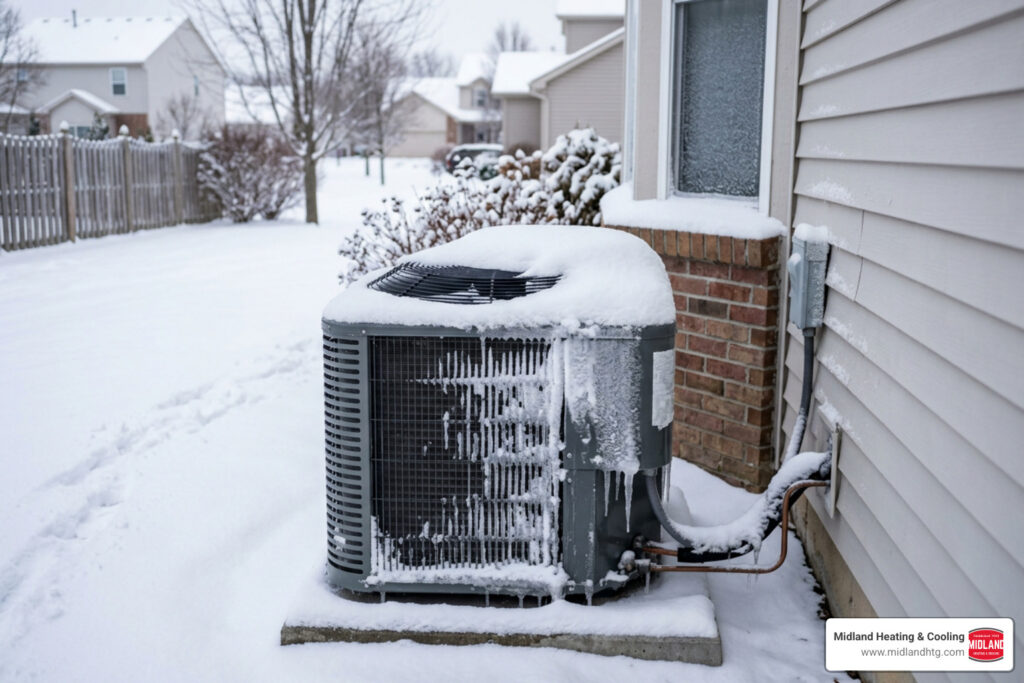
Even though standard central air conditioners are built to live outdoors, they are not completely impervious to heavy snow loads and thick ice sheets. When snow piles up around the outdoor unit, it creates a physical barrier that restricts airflow. While your air conditioner isn’t running in the winter, leaving it buried in a deep snowdrift means that moisture is held in constant, direct contact with the metal housing, delicate aluminum fins, and copper tubing.
This constant moisture exposure leads to several structural and mechanical issues. First, packed snow and heavy ice restrict any natural airflow through the cabinet, trapping humidity inside. When moisture cannot evaporate, it settles on the condenser coils. If a warm afternoon causes some of that snow to melt, the water trickles deep into the unit’s internal components. Once the temperature drops again after dark, that water freezes and expands.
This freezing and thawing cycle is incredibly destructive. Because water expands by about 9% when it freezes, it acts like a slow-motion hydraulic jack inside your AC. It can easily bend the delicate aluminum fins, warp the coil structure, and even put enough pressure on copper refrigerant lines to cause microscopic cracks. Over time, this cumulative stress can significantly shorten the life of your equipment. If you are wondering how these harsh seasonal conditions impact the longevity of your cooling system, you can read more about How Long Does an AC Actually Last in Minnesota? to understand what to expect.
Furthermore, heavy snow and ice place immense strain on the compressor if the unit is accidentally switched on, or if you run a heat pump system that relies on the outdoor unit year-round. When airflow is blocked, the compressor has to work significantly harder to move refrigerant, spiking your energy bills and wearing out critical internal valves.
Understanding How Snow and Ice Affect Outdoor AC Unit Condition Over Winter
To really grasp how snow and ice affect outdoor ac unit condition over winter, we have to look closely at the physics of freeze-thaw cycles and chemical corrosion. In the Twin Cities, we rarely get a winter that stays at a flat, consistent temperature. Instead, we experience swings where snow melts during the day and refreezes into solid ice at night.
When snow melts, it turns into water that runs down into the tightest crevices of your air conditioner. When it refreezes, the expanding ice can split open copper tubes, push electrical wires out of their brackets, and break the seals on electrical service panels. This water intrusion is particularly dangerous for the electrical system. If moisture seeps into the electrical contactor, capacitor, or wiring harnesses and then freezes, it can crack the protective plastic casings. When spring arrives and you turn the system back on, these cracked components are highly vulnerable to short circuits, ground faults, and total electrical failure.
Corrosion is another slow-acting threat. While modern AC units are treated with rust-resistant coatings, these coatings can wear thin over the years. Constant exposure to wet, packed snow accelerates the oxidation process. Rust can eat through the base pan of your unit, weaken the support brackets, and corrode the electrical connections. This can lead to refrigerant leaks, electrical failures, and structural sagging. If you notice rust stains on your concrete pad or see that your unit is starting to lean, these are clear Signs HVAC System Needs Professional Repair before the summer heat hits.
Physical Damage to Fan Blades and Coils
Beyond the invisible threats of electrical corrosion and microscopic refrigerant leaks, snow and ice cause highly visible, physical destruction to two of the most critical parts of your air conditioner: the condenser coils and the fan assembly.
The condenser coils are surrounded by thousands of tiny, paper-thin aluminum fins. These fins are designed to maximize the surface area of the coils, allowing heat to rapidly dissipate into the outdoor air during the summer. Because they are so thin, they are incredibly delicate. When heavy, wet snow slides off your roof and lands directly on top of the AC unit, the impact can flatten these fins instantly. Once the fins are bent or smashed together, air can no longer pass between them. This permanently reduces the unit’s efficiency, forcing it to run longer and work harder to cool your home.
Ice accumulation on the fan blades poses an equally severe threat. The fan motor and blades sit at the top of the unit under a protective metal grille. If freezing rain or melting roof runoff drips down onto the fan blades, it can form a thick, uneven layer of ice.
This causes two major problems:
- Weight Imbalance: A heavy coating of ice on just one side of a fan blade ruins the factory-calibrated balance of the assembly. If the fan tries to spin with this uneven weight, it will wobble violently. This wobbling rapidly wears out the motor bearings and can bend the fan shaft.
- Structural Failure: In extreme cases, the weight of the ice can actually snap the fan blades or crack the motor mounts. If the fan blades are frozen solid to the outer grille and the system is turned on, the fan motor will hum, overheat, and burn itself out in a matter of minutes because it cannot rotate.
Additionally, falling icicles from your gutters act like heavy, pointed missiles. A large icicle falling from a two-story roof can easily dent the heavy steel cabinet of your AC, break through the plastic fan grille, and puncture the delicate copper coils inside, leading to a catastrophic loss of refrigerant.
Should You Cover Your Outdoor AC Unit in Winter?
One of the most common questions we hear from homeowners in St. Louis Park, Edina, and Bloomington is: “Should I put a cover on my outdoor AC unit during the winter?”
It seems like a no-brainer. If snow, ice, and falling icicles can cause so much physical damage, shouldn’t we wrap the unit up in a heavy-duty, waterproof tarp to keep it safe?
The short answer is: Yes, but only if you do it the right way. Doing it incorrectly can actually cause far more damage than leaving the unit completely exposed to the elements.
Many homeowners run down to the local home improvement store, buy a cheap plastic tarp, wrap their AC unit tightly from top to bottom like a holiday present, and secure it with bungee cords. While this certainly keeps the snow off, it creates a highly destructive environment inside the cabinet.
Most HVAC manufacturers actively discourage the use of full, airtight plastic or vinyl covers. In fact, wrapping your unit in an unapproved, non-breathable cover that restricts natural air circulation can trap moisture inside and lead to premature failure—a condition that some manufacturers may classify as neglect, potentially voiding your equipment’s warranty.
The Pros and Cons of AC Covers
To help you make the best decision for your home, let’s break down the real-world advantages and disadvantages of using an AC cover during a Minnesota winter.
The Pros:
- Protection from Falling Objects: A solid cover protects the top of your unit from falling icicles, heavy branches, and packed snow sliding off your roofline.
- Debris Prevention: In the late autumn, a cover keeps falling leaves, pine needles, seeds, and twigs from falling through the top grille and collecting in the bottom of the base pan, where they rot and hold moisture against the steel frame.
- Shielding from Freezing Rain: A cover prevents freezing rain from coating the fan blades and forming a solid block of ice inside the fan assembly.
The Cons:
- Trapped Moisture: Standard plastic or vinyl tarps do not allow air to circulate. Any moisture that rises from the ground or seeps up through the bottom of the unit gets trapped under the cover. This creates a high-humidity greenhouse effect that accelerates rust and corrosion.
- Pest Attraction: A dark, dry, fully enclosed space wrapped in a heavy tarp is the ultimate winter resort for local mice, voles, and squirrels looking to escape the freezing Twin Cities winds.
- Mold and Mildew: The lack of airflow combined with trapped moisture creates the perfect breeding ground for mold and mildew to grow across your coils, which can impact performance and create foul odors when you start the system in the spring.
If you decide to cover your unit, the key is to use a breathable cover or a top-only shield. A top-only cover is simply a piece of treated plywood or a specialized durable plastic cap weighted down on top of the unit. This protects the top grille and fan from falling ice and debris while leaving all four sides completely open to the air, allowing moisture to freely evaporate. For more expert guidance on keeping your system in top shape year-round, check out our Essential AC Maintenance Tips.
Risks of Trapped Moisture and Pests
Let’s look closer at the two biggest risks of using a full, non-breathable cover: trapped moisture and uninvited winter guests.
When you wrap an air conditioner tightly in plastic, you prevent the sun and wind from naturally drying the unit out after a snowfall. The ground beneath the unit still holds moisture, which evaporates upward into the unit. Because the plastic cover blocks this moisture from escaping, it condenses on the cold metal surfaces inside. This constant moisture bath leads to rapid corrosion of the electrical terminals, rusts out the compressor casing, and degrades the insulation on the refrigerant lines.
Even worse, this warm, shielded environment is highly attractive to local rodents. Mice and squirrels can easily squeeze through the small openings at the bottom of the unit. Once inside a covered AC, they are protected from predators and the biting cold.
To make themselves comfortable, they will:
- Tear up the foam pipe insulation to build warm nests.
- Chew through the plastic coatings on your electrical wiring, which can cause massive short circuits and expensive electrical repairs when you turn the unit on in the spring.
- Accumulate acorns, leaves, and nesting material inside the cabinet, which blocks drainage holes and holds corrosive organic matter against the coils.
By leaving the sides of your unit uncovered, you keep the interior cold, bright, and breezy—conditions that rodents naturally avoid.
Step-by-Step Winter Protection and Maintenance Guide
Protecting your air conditioner from the harsh winter elements doesn’t require complex tools or hours of hard labor. By following a simple, proactive maintenance routine in the autumn and keeping an eye on your unit during the winter, you can prevent costly spring breakdowns and ensure your system is ready to run efficiently when the hot weather returns.
To make sure you don’t miss a single step, we recommend reviewing The Ultimate Twin Cities Spring AC Maintenance Checklist to see how your winter prep directly sets you up for spring success.
Here is our step-by-step guide to preparing your outdoor AC unit for a Twin Cities winter:
- Clear a Perimeter: Before the first snowfall, trim back any bushes, shrubs, or long grass within 2 to 3 feet of your AC unit. Remove any dead branches from overhanging trees that could break under the weight of heavy ice and fall onto your system.
- Clean the Cabinet: Gently brush away any fallen leaves, pine needles, or dirt from the outside of the unit. If there is mud or debris caked on the aluminum fins, use a garden hose with a gentle spray nozzle to rinse the coils clean. Never use a pressure washer, as the high-pressure stream will instantly bend and destroy the delicate fins.
- Inspect the Gutters: Take a look at the roofline directly above your air conditioner. Ensure your gutters are clean and draining properly. If your gutters are clogged, melting snow will overflow and drip directly onto your AC, creating massive ice dams and heavy icicle hazards.
- Insulate Exposed Pipes: Inspect the foam insulation wrapping the copper refrigerant lines running from your outdoor unit into your home. If this insulation is cracked, peeling, or missing, replace it with new foam pipe insulation sleeves to prevent thermal loss and protect the pipes from freezing temperatures.
Preventing Long-Term Damage: How Snow and Ice Affect Outdoor AC Unit Condition Over Winter
Taking a few minutes to complete these simple tasks in the fall is the best way to prevent the long-term, cumulative damage caused by winter weather. Another critical step that many homeowners forget is to completely shut off the electrical power to the outdoor unit.
Your air conditioner has a dedicated outdoor electrical disconnect box located on the wall near the unit. Inside this box is a switch or a pull-out plug that cuts off power to the system.
Why is this important in the winter?
- Preventing Accidental Startup: If someone in your home accidentally bumps the thermostat and switches it to “cool” on a mild winter day, the outdoor unit will attempt to start up. If the fan blades are frozen solid or the compressor is cold, this can instantly burn out the motor or damage internal valves.
- Crankcase Heater Management: Many modern central AC units have built-in crankcase heaters designed to keep the compressor oil warm during cold weather. While this is great for spring and autumn operation, leaving the power on all winter means this heater will constantly draw electricity to keep a dormant unit warm, unnecessarily inflating your winter utility bills.
By shutting off the power at the disconnect, you guarantee the system remains completely dormant until you are ready to use it. If you want to make sure your entire system is fully protected and ready for the seasonal transition, it is wise to Prevent AC Problems Before Summer Arrives by scheduling a professional checkup in the autumn.
Safe Snow Removal Techniques
Once the snow starts falling in places like Wayzata, Hopkins, and Eden Prairie, your maintenance job shifts to monitoring and safe snow removal.
After a major winter storm, it is a good idea to head outside and check on your outdoor unit. If a heavy drift has completely buried the system, you should gently clear the snow away to maintain proper airflow and prevent constant moisture contact. However, you must be incredibly careful with the tools and techniques you use.
The Golden Rules of Winter AC Snow Removal:
- Use a Soft Broom: Always use a soft-bristled broom or your gloved hands to brush fresh snow off the top and sides of the unit. This removes the snow without scratching the protective paint or bending the delicate aluminum fins.
- Avoid Metal Shovels: Never use a metal shovel, ice scraper, or any sharp metal tools near your air conditioner. One slip of a metal shovel can easily slice through the aluminum fins, puncture the copper refrigerant lines, or cut through electrical conduit.
- Keep a 2-Foot Clearance: Shovel a clear path around the unit, maintaining at least 2 feet of open space on all sides. This allows cold air to circulate freely around the cabinet, preventing moisture from staying trapped against the metal.
- Never Use Salt or Chemical Ice Melt: Do not sprinkle rock salt or chemical ice melters on or immediately around your AC unit. These chemicals are highly corrosive and will rapidly eat through the aluminum fins, steel cabinet, and copper piping, causing permanent, irreparable damage.
If your unit becomes completely encased in a thick sheet of solid ice, do not attempt to chip the ice off with a hammer, screwdriver, or pry bar. The impact from these tools will easily dent the housing and puncture the internal coils. Instead, let the ice melt naturally, or call a professional if you suspect the ice is causing structural damage. Understanding Why Regular AC Service is Crucial will help you see why having a professional handle these delicate situations is always the safest bet for your investment.
Frequently Asked Questions about Winter AC Care
We get a lot of questions from local homeowners about how to handle specific winter situations. Here are some of the most common myths, concerns, and questions we answer every winter.
Should I cover my heat pump in the winter?
No, you should never cover an operating heat pump in the winter.
While a standard central air conditioner sits completely dormant during the winter, a heat pump works year-round to heat your home. It operates by extracting thermal energy from the outdoor air and transferring it indoors. To do this, the outdoor unit must have continuous, unobstructed airflow on all four sides.
If you put a cover on a running heat pump, you will instantly block the airflow, causing the system to suffocate. This will force the system to switch to expensive auxiliary electric resistance heat, spike your energy bills, and quickly cause the compressor to overheat and fail.
Furthermore, heat pumps are equipped with automatic defrost cycles. When frost naturally forms on the outdoor coils, the system temporarily reverses its operation to send warm refrigerant to the outdoor unit, melting the ice. This process requires open air to allow the steam and meltwater to escape. Covering the unit will trap this moisture, causing a massive block of ice to form inside the cabinet.
Can I pour hot water on my frozen outdoor unit?
No, you should never pour boiling or hot water on a frozen AC unit or heat pump.
While it might seem like a quick, satisfying way to melt away a thick block of ice, pouring hot water on freezing cold metal components is a recipe for disaster. This creates a phenomenon known as thermal shock.
When extremely cold copper coils, aluminum fins, or steel casings are suddenly hit with hot water, the rapid temperature change causes the metal to expand at an uneven, violent rate. This sudden stress can easily crack the copper refrigerant lines, shatter plastic electrical housings, and warp the coil structure.
Additionally, once that hot water cools down, it will quickly refreeze in the sub-zero Minnesota temperatures. This creates an even thicker, more destructive layer of ice deep inside the unit’s internal components, making the original problem much worse. If your unit is heavily iced over, the safest option is to turn the system off and let it melt naturally, or contact a certified HVAC technician to safely resolve the issue.
How do I know if my AC was damaged over the winter?
Sometimes, despite your best efforts, winter weather can cause quiet damage to your air conditioner. Because you won’t be running the cooling system for several months, this damage can sit unnoticed until the first hot day of summer.
Here are the key warning signs to look for during a spring visual inspection:
- Bent or Smashed Fins: Look through the protective outer grille. If you see large areas where the thin aluminum fins are flattened, crushed, or warped, air will not be able to pass through properly.
- Rust or Corrosion: Check the base pan, support brackets, and electrical panels for signs of deep rust, peeling paint, or white powdery corrosion on the copper joints.
- Unusual Noises: When you turn the unit on for the first time in spring, listen closely. If you hear loud rattling, grinding, squealing, or buzzing noises, this indicates a bent fan blade, worn-out motor bearings, or a struggling compressor.
- Weak Airflow or Warm Air: If the system turns on but only blows lukewarm air from your indoor vents, you may have a refrigerant leak caused by cracked copper lines.
If you notice any of these warning signs, do not continue running the system. Running a damaged AC can quickly turn a minor, inexpensive repair into a catastrophic failure. Instead, schedule a professional AC Tune Up Minneapolis to have a certified technician thoroughly inspect, clean, and test your system before the summer heat arrives.
Conclusion
Minnesota winters are undeniably beautiful, but they place an incredible amount of stress on our homes’ mechanical systems. Understanding how snow and ice affect outdoor ac unit condition over winter is the first step toward protecting your investment and ensuring your home remains comfortable year-round. By taking a few simple, proactive steps in the autumn—such as clearing debris, shutting off the outdoor power, and using a breathable top cover—you can easily prevent expensive winter damage.
At Midland Heating & Cooling, we have been helping our neighbors across the Twin Cities navigate harsh winters for more than 70 years. As a local, family-owned business, we take pride in delivering honest, reliable service with a 100% customer satisfaction guarantee. Whether you live in Minneapolis, St. Paul, Edina, Bloomington, Minnetonka, or any of our surrounding communities, our team of certified, friendly technicians is always here to help.
Don’t wait for the first sweltering day of summer to find out if the winter weather damaged your air conditioner. Be proactive and Schedule Pre-Summer AC Maintenance with us today. Our comprehensive spring inspections will identify and resolve any quiet winter damage, optimize your system’s efficiency, and give you complete peace of mind all summer long.
Ready to get started? Contact our Minneapolis HVAC team today to schedule your seasonal tune-up!