

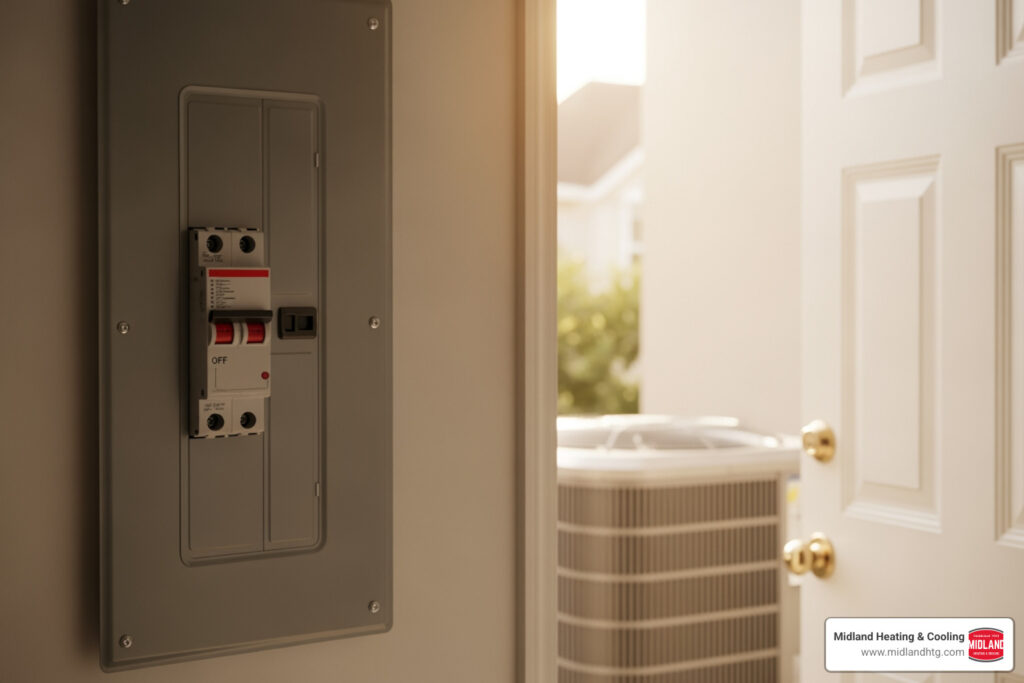
What to Do When Your Circuit Breaker Trips the Moment Your AC Turns On
If you’re dealing with a circuit breaker tripping when ac turns on what to do next is straightforward — but the why matters just as much as the fix. Here’s a quick answer to get you started:
Quick Action Steps:
- Turn your AC off at the thermostat immediately
- Locate your electrical panel and find the tripped breaker (it will be in the middle or “off” position)
- Push the breaker firmly to “OFF” first, then back to “ON”
- Wait 30 minutes before turning the AC back on
- Check and replace your air filter if it’s clogged
- If the breaker trips again, stop resetting it and call an HVAC professional
That first moment your AC kicks on and the lights go out is genuinely alarming. Your circuit breaker isn’t being dramatic — it’s doing exactly what it’s designed to do. It’s cutting power before something more serious, like overheated wiring or a damaged compressor, causes real harm.
The tricky part? There are several reasons this can happen, ranging from a simple clogged air filter to a failing compressor that needs professional attention. Some causes are easy DIY fixes. Others are electrical faults that can be dangerous to ignore or repeatedly reset.
For Twin Cities homeowners heading into the heat of summer, a tripping AC breaker is more than an inconvenience — it’s a warning sign worth understanding. This guide walks you through every common cause, what you can safely check yourself, and when it’s time to call in a pro.
Understanding the Role of Your AC Circuit Breaker

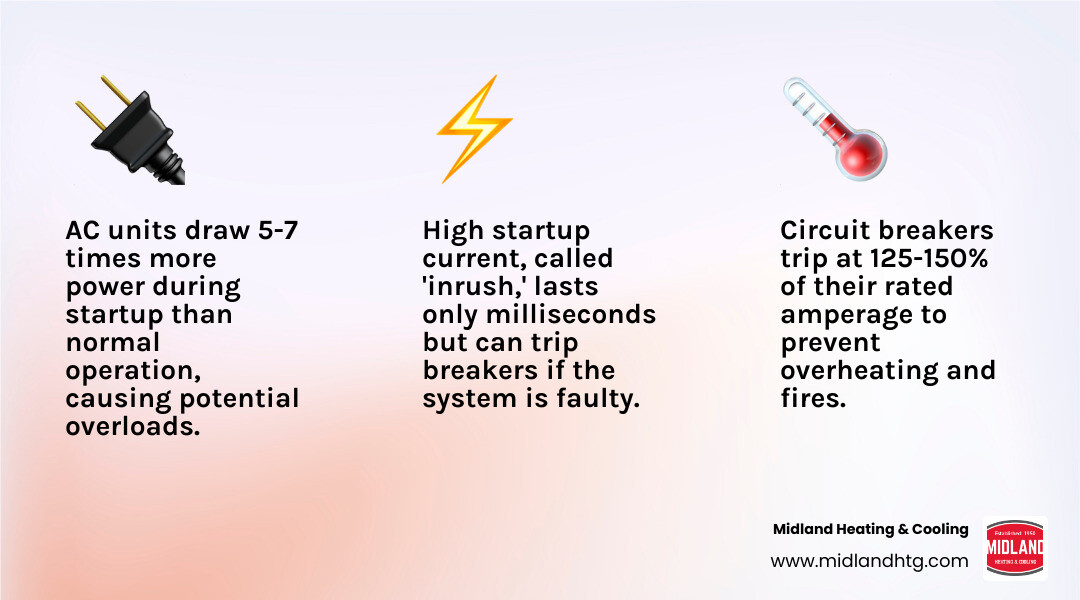
To solve the mystery of the tripping breaker, we first need to understand what this little switch actually does. Think of your circuit breaker as a “safety hero.” Its primary job is to monitor the flow of electricity through your home’s wires. Every breaker has a specific amperage rating—the maximum amount of current it can handle before it gets dangerously hot.
When your air conditioner turns on, it requires a significant surge of power to get the motor and compressor moving. If the system draws more electricity than the breaker is rated for, the breaker “trips” or snaps to the off position. This prevents the wires inside your walls from melting their insulation and starting a fire.
There are generally three main electrical reasons a breaker trips:
- Overload: This is the most common. It happens when the AC is working too hard and pulling more “amps” than the circuit can handle.
- Short Circuit: This occurs when a “hot” wire touches a “neutral” wire, causing a sudden, massive spike in current.
- Ground Fault: This is a type of short circuit where electricity leaks out of its intended path and hits the ground wire or the metal casing of the unit.
Understanding why your AC circuit breaker keeps tripping is the first step toward a cooler home.
| Symptom | Likely Cause | Danger Level |
|---|---|---|
| Trips after running for 15-30 minutes | Overload (Dirty filters/coils) | Moderate |
| Trips the exact millisecond the AC kicks on | Short Circuit or Ground Fault | High |
| Breaker feels hot to the touch or smells like ozone | Electrical Arcing/Loose Wiring | Extreme |
Common Causes for a Circuit Breaker Tripping When AC Turns On and What to Do
When you are faced with a circuit breaker tripping when ac turns on what to do depends largely on the “why.” Often, the culprit isn’t a major mechanical failure but a lack of maintenance.
Dirty Air Filters
We cannot stress this enough: a dirty air filter is the leading cause of AC issues in the Twin Cities. When the filter is clogged with dust, pet hair, and Minneapolis allergens, the blower motor has to work twice as hard to pull air through. This extra effort increases the electrical draw. If the motor strains too much, it “redlines” and trips the breaker. Check out our home AC troubleshooting guide for more on what to check before calling us.
Dirty Condenser Coils
Your outdoor unit (the condenser) is responsible for releasing the heat collected from inside your home. If the coils are covered in dirt, grass clippings, or cottonwood seeds, they act like a “wool sweater” on a hot day. The unit can’t shed heat efficiently, causing the compressor to run hotter and pull more electricity. This is a common reason why your AC is not cooling properly and eventually trips the power.
Frozen Evaporator Coils
If airflow is restricted or refrigerant is low, your indoor coils can actually drop below freezing and ice over. This ice acts as a barrier, causing the system to run constantly without cooling. This sustained high-power draw eventually leads to a trip. If you notice water leaking from your AC unit, it might be the ice melting off those frozen coils.
Troubleshooting a Circuit Breaker Tripping When AC Turns On What to Do First
Before you assume the worst, there are a few simple DIY steps you can take to see if you can resolve the issue safely.
- Check the Thermostat: Ensure it is set to “Cool” and the temperature is lower than the current room temp. Sometimes a thermostat issue causes the AC to blow warm air or cycle oddly.
- Visual Inspection: Walk around your outdoor unit. Is there a bush growing into it? Are there piles of leaves blocking the vents? Clear at least two feet of space around the unit.
- The Filter Test: Hold your air filter up to a light. If you can’t see the light through it, replace it immediately.
- Check the Vents: Ensure your supply and return vents inside the house aren’t blocked by furniture or curtains.
Identifying Mechanical Failures: Circuit Breaker Tripping When AC Turns On What to Do for Motors
If the simple fixes don’t work, you might be dealing with a failing internal component. These parts are under the most stress during the “startup” phase.
- Failing Capacitor: The capacitor is like a large battery that gives the motors the “kick” they need to start. If it’s weak, the motor will struggle to turn over, drawing excessive current and snapping the breaker. You might hear a humming or buzzing noise before the trip.
- Compressor Failure: The compressor is the heart of your AC. As it ages (usually after 12-15 years), it can experience “hard starts.” A compressor struggling to start will pull a massive amount of electricity.
- Fan Motor Burnout: If the outdoor fan motor is seized or shorted, it will trip the breaker immediately to prevent a fire. This often leads to AC short cycling where the unit tries to start but fails.
- Strange Noises: Clanging, screeching, or grinding are all signs your AC needs professional repair.
How to Safely Reset a Tripped AC Breaker
Resetting a breaker seems simple, but there is a right way to do it to protect your equipment.
- Turn off the AC at the thermostat: Never reset a breaker while the thermostat is still calling for cooling. This prevents a sudden power surge.
- The “Off-On” Flip: Most breakers don’t just flip to “OFF” when they trip; they hang out in the middle. You must push the switch firmly to the OFF position until you hear a click before flipping it back to ON.
- The 30-Minute Rule: Once the breaker is reset, wait 30 minutes before turning the AC back on at the thermostat. This allows the internal pressures in the AC system to equalize and gives the motor protectors time to reset.
- The “One-Reset” Limit: You get one freebie. If you reset the breaker and it trips again immediately or within the same day, stop. Repeatedly resetting a tripping breaker is a major fire hazard and can permanently destroy your compressor.
Safety Red Flags
If you notice any of the following, do not attempt to reset the breaker. Call us immediately:
- A burning smell (like burnt plastic or ozone).
- Visible smoke or scorch marks on the outlet or breaker panel.
- The breaker feels hot to the touch.
- A loud “pop” or flash of light when the AC tries to start.
- Signs your HVAC system needs professional help are often quite obvious if you know what to look for.
Frequently Asked Questions About AC Breaker Trips
Is it dangerous to keep resetting my breaker?
Yes, it is extremely dangerous. A circuit breaker is a safety device. If it keeps tripping, it is telling you that there is an unsafe amount of heat or electricity in the system. By forcing it to stay on, you are bypassing a fire-prevention mechanism. This can lead to melted wire insulation, electrical arcing, and house fires.
Can a dirty filter really cause an electrical trip?
Absolutely. We see this in the Twin Cities all the time. A clogged filter restricts airflow, which makes the blower motor work harder and run longer. This creates heat and increases the “amp draw.” In the middle of a 90-degree July day in Minneapolis, that extra strain is often enough to push the breaker over its limit.
How do I know if my compressor is grounded?
A “grounded” compressor happens when the electrical windings inside the motor break down and hit the metal side of the compressor. This creates a direct path to the ground, causing a massive short circuit. The tell-tale sign is an immediate trip. The second the AC tries to kick on, the breaker snaps off instantly. This requires professional diagnostics and usually a compressor replacement.
Conclusion
Dealing with a circuit breaker tripping when ac turns on what to do can be stressful, especially during a Minnesota heatwave. While a dirty filter or a bit of debris around your outdoor unit are easy fixes, many electrical issues require the steady hand of a certified expert.
At Midland Heating & Cooling, we’ve been serving the Twin Cities for over 70 years. Whether you’re in St. Louis Park, Edina, or Minnetonka, our family-owned team is dedicated to keeping your home safe and cool. Don’t risk your system’s longevity—or your family’s safety—by ignoring a tripping breaker.
If your AC has tripped its breaker more than once, it’s time for a professional eye. Schedule professional HVAC service in the Twin Cities with Midland Heating & Cooling today, and let’s get your comfort back on track!