
Is Your 12-Year-Old AC a Disaster Waiting to Happen This Summer?

The signs your 12 year old ac is nearing end of life are often easy to miss — until your home hits 85°F on a July afternoon and the repair truck is booked out for a week. Here are the five clearest warning signs to watch for right now:
5 Signs Your 12-Year-Old AC Is Nearing End of Life
- Rising energy bills and longer run times — your system is working harder to do less
- Uneven cooling, weak airflow, or clammy air — comfort is inconsistent room to room
- Frequent repairs, short cycling, or tripped breakers — reliability is breaking down
- Strange noises, smells, ice buildup, or leaks — components are showing physical wear
- Refrigerant type and parts availability working against you — especially on R-22 or aging R-410A systems
If you’re seeing two or more of these at once, your system is likely past the tipping point.
The average residential central AC lasts 12 to 15 years. That means a 12-year-old system isn’t ancient — but it’s solidly in the window where efficiency drops, parts wear out, and the math on repairs starts to shift. By year 10, most systems are running at only 80 to 85 percent of their original efficiency. By year 12, a unit originally rated at 13 SEER can effectively perform like a 9 or 10 SEER system — using 25 to 35 percent more electricity to deliver less comfort.
For Twin Cities homeowners, this matters a lot. Minnesota summers are short but intense. Your AC doesn’t get a long break-in period — it goes from sitting idle to running hard through heat and humidity in a matter of weeks. When a 12-year-old system finally gives out, it almost always does so at the worst possible moment.
The good news? If you know what to look for now, you still have time to plan ahead — rather than scrambling during a heat wave.
Why 12 Years Old Is a Critical AC Decision Point
A lot of homeowners hear that central AC systems can last 12 to 15 years and assume year 12 means they still have plenty of runway. Sometimes that is true. Often, it is not.
By this age, many systems have already gone through thousands of cooling cycles. Bearings wear. Electrical components get less reliable. Coils collect years of grime and corrosion. Even if the AC still turns on, it may no longer cool the way it did when it was new.
That is why age 12 is such an important checkpoint. Your system may still be operating, but it may also be sliding from “old but usable” into “expensive and unpredictable.”
What the typical lifespan really looks like in Minnesota
In the Twin Cities, lifespan is not just about the calendar. It depends on maintenance history, installation quality, airflow, and how hard the system has to work during humid stretches.
Minnesota does have a shorter cooling season than hot southern climates, but that does not mean ACs here have an easy life. We often get sharp transitions into muggy weather, and older systems can struggle when they suddenly have to keep up. Homes with duct leaks, dirty filters, cottonwood buildup, or poor airflow can make that strain even worse.
If you want a deeper local breakdown, we recommend reading How Long Does an AC Actually Last in Minnesota?.
Why a 12-year-old system can still run but be near the end
This is the sneaky part. An aging AC does not always fail dramatically at first. It often declines in slow, annoying ways.
A 12-year-old unit may still cool on mild days but struggle when temperatures spike. The compressor may be getting tired. The fan motor may be drawing harder starts. The evaporator or condenser coil may be dirty or partially restricted. On paper, the system still works. In real life, comfort slips and repairs start stacking up.
That is the heart of the issue with the signs your 12 year old ac is nearing end of life: the system may still be limping along while quietly costing you more money and reliability every month.
5 Clear Signs Your 12 Year Old AC Is Nearing End of Life
When homeowners ask us whether an older AC needs replacement, we rarely look at just one symptom. We look for a pattern.
A single problem might be repairable. A cluster of problems on a 12-year-old system usually means the unit is nearing the end of its useful life.
Here are the five clearest signs.
1) Rising energy bills and longer run times are the first signs your 12 year old ac is nearing end of life
One of the earliest clues is simple: your AC runs longer, but your home does not feel better.
Research shows that by year 10, many central AC systems operate at only 80 to 85 percent of their original efficiency. By year 12, a system that started around 10 to 13 SEER may perform more like a 9 or 10 SEER unit in real conditions. That means it can use 25 to 35 percent more electricity to produce the same cooling.
Common signs include:
- Summer electric bills rising even though your usage habits have not changed
- Longer cooling cycles in the afternoon and evening
- The thermostat reaching set point more slowly
- The AC running almost nonstop during humid weather
If your home used to cool down quickly and now seems to take forever, that is not just “old age being old age.” It is usually a sign of efficiency loss, airflow problems, or mechanical wear.
Think of it like an older car that still drives but burns more gas and groans on every hill. It gets you there, but not gracefully.
2) Uneven cooling, weak airflow, and poor humidity control
Cooling problems do not always mean the air coming out is warm. Sometimes the air is technically cool, but the house still feels uncomfortable.
This is especially common in older systems that are losing capacity. The upstairs may feel warmer than the main floor. One bedroom stays stuffy. The house feels clammy even though the thermostat says the temperature is fine. That “sticky” feeling is a big clue in Minnesota summers, where humidity can make a home feel uncomfortable fast.
Watch for:
- Hot and cold spots from room to room
- Weak airflow at vents
- Humid or clammy indoor air
- Trouble removing moisture during muggy days
- Longer run times without even temperatures
Not every comfort issue means the condenser is dying. Duct leakage, static pressure problems, dirty filters, insulation gaps, and thermostat placement can also contribute. But if these issues are getting worse on a 12-year-old AC, the system may no longer have enough real-world capacity to keep up.
3) Frequent repairs, short cycling, and breaker trips
Aging ACs often become needy. First it is a capacitor. Then a contactor. Then a hard-start issue. Then the breaker trips on the hottest day of the week because apparently your AC loves drama.
Repeated service calls are one of the clearest warning signs that reliability is falling apart. If you have had several repairs in the last year or two, it is time to step back and look at the big picture, not just the latest invoice.
Short cycling is another major red flag. That means the system starts, runs briefly, shuts off, and then repeats the pattern. This can be caused by electrical problems, airflow issues, thermostat problems, low refrigerant, or compressor stress. Whatever the root cause, repeated short cycles increase wear and reduce comfort.
Breaker trips also matter. An AC that repeatedly trips the breaker may be dealing with a failing motor, compressor problems, wiring issues, or excessive electrical draw.
If you are weighing repair versus replacement, our guide Fix It or Ditch It: How to Decide If Your AC Is Worth Repairing can help.
A few rules of thumb homeowners often use:
- If a major repair lands around 25 to 50 percent of replacement cost, replacement deserves serious consideration
- If system age multiplied by repair cost reaches 5,000 or more, many homeowners choose replacement
- If you have had two or more notable repairs in a short time, the trend matters
4) Strange noises, smells, leaks, or ice buildup
Physical symptoms are often the AC’s version of waving a white flag.
New noises should never be ignored on an older system. Grinding can point to motor bearing problems. Buzzing may suggest electrical trouble or failing components. Clicking that keeps repeating can indicate relay or control issues. A loud hum with no startup is often a bad sign for compressor operation.
Smells matter too:
- Musty odors can point to moisture or microbial growth
- Burning smells can indicate wiring or electrical issues
- Sour or stale smells can signal buildup in the system
Then there are visible warning signs:
- Water around the indoor unit
- Ice on the evaporator coil or refrigerant line
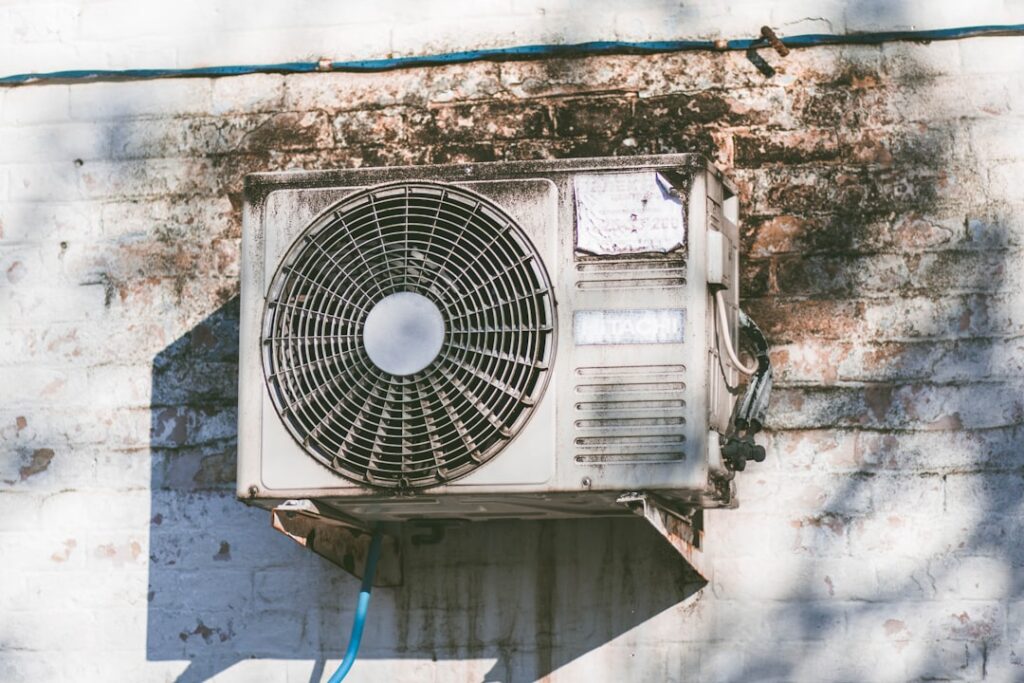
- Rust or corrosion
- Oily residue near refrigerant connections
Ice buildup is especially important. Homeowners sometimes assume ice means the system is cooling extra well. We wish. In reality, ice often means poor airflow, low refrigerant, or a failing component. Running the system in that condition can cause further damage.
5) Your refrigerant type, age, and parts availability are working against you
Sometimes the biggest problem with a 12-year-old AC is not what is broken today. It is what will be harder to repair tomorrow.
If your system uses R-22 refrigerant, that is a major strike against long-term repairability. R-22 production ended years ago, so service depends on reclaimed supply. That makes leak-related repairs much less practical on older systems.
If your unit uses R-410A, it is not illegal to operate in 2026. That is an important point. Existing R-410A and R-22 systems can still be used. The rules affect new equipment manufacturing and installation, not your current AC simply sitting in your backyard doing its best.
Still, 2026 matters because refrigerant transitions and equipment changes can affect repair decisions. Older components may become slower to source. Certain repairs may feel less worthwhile on systems already near the end of life. And if your 12-year-old unit has a major refrigerant leak, compressor issue, or coil failure, replacement usually becomes the smarter path.
What 2026 Changes Mean for Repair vs. Replacement
The 2026 HVAC landscape matters because homeowners are not just comparing “repair now” versus “replace someday.” They are comparing repairing old technology versus planning for newer standards.
| Older AC repair path | Planned replacement path |
|---|---|
| Keep patching an aging system | Replace on your timeline |
| Efficiency continues to decline | Better comfort and lower energy use |
| Parts and refrigerant may be harder to source | Equipment matched to current standards |
| Higher risk of peak-summer breakdown | Better scheduling and less stress |
| More reactive decisions | More time to review options |
SEER2 ratings and why old SEER comparisons can be misleading
In 2026, SEER2 is the efficiency language homeowners need to know. SEER2 uses tougher testing conditions than the old SEER system, including higher external static pressure. That means the numbers are not directly interchangeable.
So if you are comparing your old 13 SEER unit to a new system, be careful not to compare old-label numbers to new-label numbers as if they are identical. They are not. What matters most is comparing current equipment on the same SEER2 scale and evaluating how much better a properly sized modern system will perform in your home.
Will your older AC be illegal to run in 2026?
No. Existing R-410A and R-22 systems are not illegal to operate in 2026.
What changes are the rules for new equipment manufacturing and installation, along with the ongoing shift to newer refrigerants and updated efficiency standards. So if your current system still works, you are not suddenly breaking the law by using it.
The real issue is practicality. As systems age, refrigerant-related repairs and hard-to-find parts can tilt the decision toward replacement faster than many homeowners expect.
When repair still makes sense and when replacement becomes smarter
We are not in the “replace everything old immediately” camp. Some repairs still make sense.
Repair may be reasonable when:
- The repair is minor
- The system has been reliable overall
- Comfort is still good
- The unit does not have repeated refrigerant or compressor problems
Replacement becomes more attractive when:
- A major repair hits the 25 to 50 percent threshold
- The age-times-repair-cost math reaches the $5,000 Rule
- The compressor or coil is failing
- Repairs are becoming frequent
- Bills are rising and comfort is falling
- The system uses R-22
For another season-based look at timing, see Signs AC Needs Replacement This Winter.
How Minnesota Weather and Home Conditions Shorten AC Life
Twin Cities weather is not desert heat, but it can still be rough on an older AC. Heat waves, sticky humidity, pollen, cottonwood fluff, dust, and storm debris all add up.
Climate and site conditions that accelerate wear
Several local conditions can shorten AC lifespan or make an older unit perform worse:
- High humidity increases cooling load
- Cottonwood and yard debris clog condenser fins
- Dust and lawn clippings reduce heat transfer
- Direct sun and poor clearance around the unit trap heat
- Hail and storm damage can weaken coils and cabinet parts
Coastal salt is not really the Twin Cities story, so the bigger local issues are humidity, debris, and airflow restriction.
Home factors that make an older AC seem worse than it is
Sometimes the AC is aging, but the house is also making its job harder.
Examples include:
- Leaky ductwork
- Poor attic insulation
- Air leaks around windows and doors
- Oversized or undersized equipment
- Thermostats placed in misleading locations
This matters because a 12-year-old AC may look “dead” when part of the problem is delivery, not just equipment. A proper diagnosis should look at the full system.
What homeowners can do right now to stretch remaining life
If replacement is not happening this minute, there is still a lot you can do to reduce failure risk:
- Change filters every 1 to 3 months during cooling season
- Keep 2 to 3 feet of clearance around the outdoor unit
- Gently rinse outdoor coils when dirty
- Check that supply and return vents are open and unobstructed
- Flush or inspect the condensate drain
- Schedule annual maintenance before summer
These steps will not make a worn-out compressor young again, but they can help an older system run more safely and efficiently while you plan ahead. For more guidance, visit Essential AC Maintenance Tips and Why Regular AC Service Is Crucial.
What to Do Before Your AC Fails During a Summer Heat Wave
The worst time to make a replacement decision is when the house is hot, the phone is ringing, and everyone is cranky.
During peak summer demand, repair wait times can increase dramatically. In some markets, homeowners can wait 5 to 7 days for service during heavy heat waves. Even here in Minnesota, the busiest stretches of summer can tighten schedules fast.
Book maintenance and get a condition check before peak summer
A preseason visit can tell you a lot about where your system stands. We recommend scheduling a condition check that includes:
- Overall equipment condition
- Airflow and performance review
- Electrical component inspection
- Drain and coil inspection
- Refrigerant-related evaluation if needed
Helpful next reads:
- Schedule Pre-Summer AC Maintenance
- Prevent AC Problems Before Summer Arrives
Plan the next step if your system is already showing multiple signs
If your AC is already showing several end-of-life symptoms, do not wait for the hottest week of the year.
Instead:
- Start planning in the shoulder season when possible
- Ask for proper load calculations, not guesswork
- Make sure the new indoor and outdoor equipment are matched
- Keep rebate and AHRI paperwork organized
- Confirm thermostat compatibility
For Minnesota-specific planning advice, see The Short Season Struggle: When to Replace Your Aging Minnesota AC.
Frequently Asked Questions About Signs Your 12 Year Old AC Is Nearing End of Life
Can a 12-year-old AC still work well enough to keep?
Yes, sometimes. Age alone does not automatically mean replacement. If the system has been maintained well, cools evenly, controls humidity, and has not needed frequent repairs, it may still have some useful life left.
But if age is combined with rising bills, comfort issues, or repeated repairs, that is when replacement usually starts making more sense.
How can I tell if my AC is just dirty or truly wearing out?
Start with the basics:
- Check the filter
- Look for blocked outdoor coils
- Make sure vents are open
- Notice whether run times are getting longer
- Compare current summer comfort and bills to prior years
A dirty system can mimic bigger issues, but persistent problems after maintenance often point to genuine wear. A professional inspection can separate airflow and maintenance issues from true end-of-life symptoms.
Should I wait until my AC completely fails?
Usually, no. Waiting for total failure sounds economical, but it often creates more stress and fewer options. You may face emergency scheduling delays, less favorable timing, and several uncomfortable days without cooling.
Planned replacement is usually easier on the household than surprise replacement in the middle of a July heat wave.
Conclusion
A 12-year-old AC is not automatically finished, but it is absolutely at the age where homeowners should pay close attention. When you see rising bills, longer run times, weak airflow, humidity problems, repeated repairs, or refrigerant-related headaches, those are strong clues your system is nearing the end of its practical life.
At Midland Heating & Cooling, we help homeowners across Minneapolis, St. Louis Park, St. Paul, Edina, Eden Prairie, Minnetonka, Hopkins, Bloomington, Wayzata, and Excelsior make smart, low-stress decisions before summer breakdowns force the issue. As a local family-owned company with more than 70 years of service, we focus on clear answers, honest recommendations, and reliable comfort.
If your AC is showing more than one of the warning signs above, now is the time to act. Explore our AC Tune Up Minneapolis, learn more about Air Conditioning Preventative Maintenance Minneapolis MN, or visit our main Air Conditioning page to schedule service or plan your next step.