

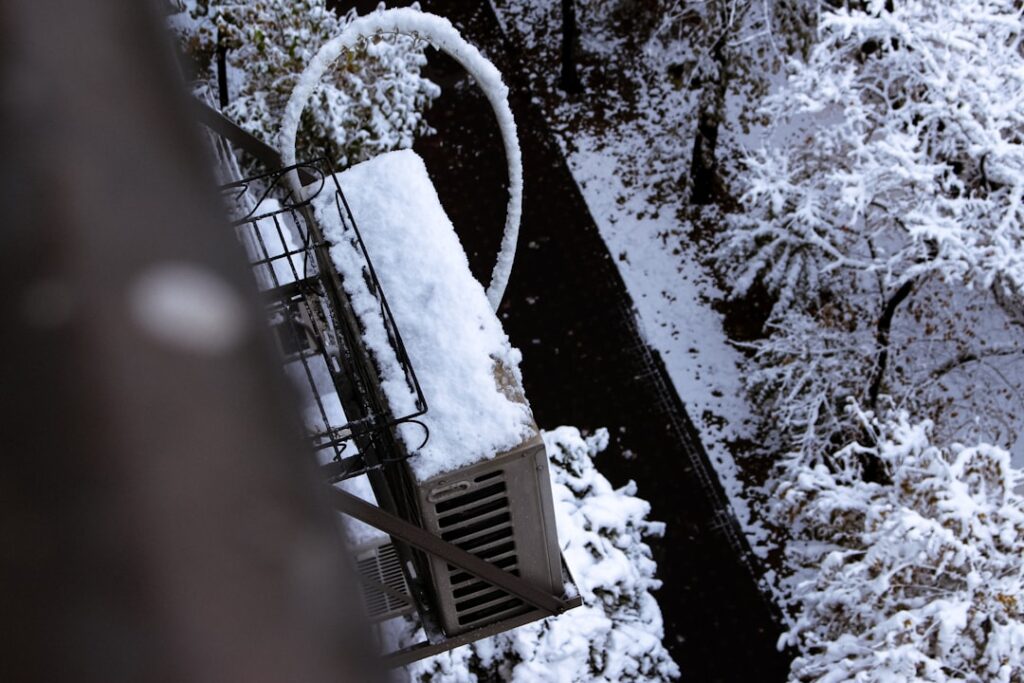
Is Covering Your AC Unit in a Twin Cities Winter Actually a Good Idea?
If you’ve ever wondered should you cover your AC unit during a Twin Cities winter, here’s the short answer: probably not with a full cover — but there are some smart, targeted steps worth taking.
Quick Answer:
- Modern AC units are built to handle Minnesota’s snow, ice, and cold
- Full covers trap moisture, invite rodents, and can cause rust and mold
- Covering only the top (with plywood or a breathable cover) can protect against debris and falling ice
- Leaving the sides open allows airflow and moisture evaporation
- Shutting off power to the unit at the breaker is always recommended for winter
Every fall, Twin Cities homeowners face the same question: do I need to wrap up my outdoor AC unit before the snow hits? It’s a reasonable instinct — you cover your grill, your patio furniture, why not your AC? But when it comes to HVAC equipment, the rules are a little different. Done wrong, covering your unit can actually cause more damage than a Minnesota blizzard would on its own.
This guide breaks down the real risks, the right approaches, and what local HVAC experts actually recommend so you can head into winter with confidence.
As we look ahead to the winter of May 2026, it is vital to remember that weather resistance is baked into the design of your cooling system. Your outdoor condenser is a rugged piece of machinery designed to live outside. However, understanding the nuances of local climate protection is a key part of why Regular Hvac Maintenance Is Important.
Should you cover your ac unit during a twin cities winter?
The debate over whether should you cover your ac unit during a twin cities winter often comes down to what you are trying to protect the unit from. Are you worried about the cold? Don’t be. These units are tested in extreme temperatures. Are you worried about moisture? Rain and snow are expected. The real “villain” in a Minnesota fall and winter is actually debris—leaves, seeds, and pine needles—and heavy falling ice.
When debris gets trapped inside the unit, it holds onto moisture like a sponge. This constant dampness against the internal metal components can lead to premature rust and corrosion. A properly applied cover can help, but it must prioritize two things: debris protection and airflow. Without airflow, moisture cannot evaporate, and that is when the trouble starts. Following Important Hvac Maintenance Tips means finding a balance between shielding the unit and letting it breathe.
Expert advice on whether you should cover your ac unit during a twin cities winter
From our perspective as local HVAC professionals, we generally advise against the “shrink-wrap” approach. If you use a non-breathable plastic tarp or a tight-fitting vinyl cover that reaches all the way to the ground, you are essentially creating a greenhouse. During our Twin Cities freeze-thaw cycles, sun hits that dark cover, melts the frost inside, and creates a humid environment that can’t escape.
This trapped condensation is the primary cause of rust and electrical shorts when spring finally rolls around. If you are in an area like St. Louis Park and want to ensure your system is ready for the first hot day of 2027, focusing on Hvac/St Louis Park Mn/Ac Tune Up services is a much better investment than an expensive, airtight cover.
Manufacturer guidelines: should you cover your ac unit during a twin cities winter?
Most major manufacturers do not require you to cover your unit. In fact, some specifically warn against it in their warranty documentation. Why? Because the unit’s internal components, like the compressor and the fan motor, are sealed against the elements. They are also designed to handle a certain “snow load.”
In places like Edina, where we see significant accumulation, the weight of the snow isn’t usually the issue—it’s the moisture trapped by a cover that voids warranties by causing avoidable corrosion. Before you wrap anything up, check your manual or schedule an Hvac/Edina Mn/Ac Tune Up to have a professional verify that your unit is winter-ready according to its specific brand guidelines.
The Hidden Dangers of Full AC Covers in Minnesota
While it might feel like you’re doing your AC a favor by tucking it in for the winter, full covers often do more harm than good. Here is a breakdown of what happens under those tarps:
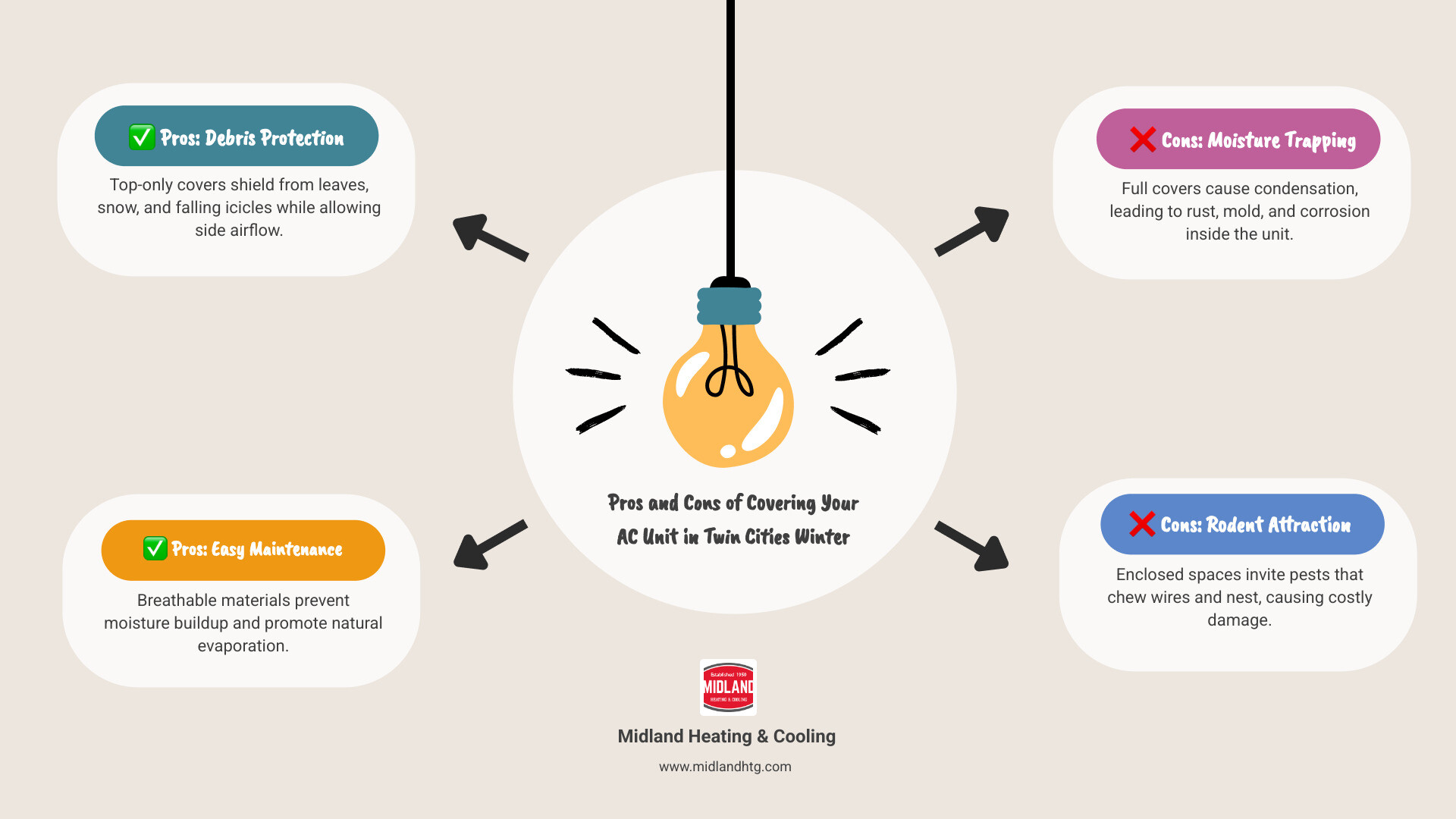
| Feature | Full Cover (Plastic/Vinyl) | Top-Only Protection (Plywood/Mesh) |
|---|---|---|
| Moisture Trapping | High – Causes rust and mold | Low – Allows side airflow |
| Rodent Risk | High – Creates a warm, dark nest | Low – No “walls” for shelter |
| Debris Shielding | Excellent | Good |
| Airflow | None | Excellent |
| Ice Protection | Moderate | Excellent (with plywood) |
One of the biggest issues we see in the Twin Cities is rodent nesting. Mice and rats love a covered AC unit because it provides a windbreak and shelter from predators. Once they move in, they often start chewing on the colorful “spaghetti” (your wiring), which leads to a very expensive Signs Ac Needs Replacement This Winter or, at the very least, a major repair bill in the spring.
Best Practices for Protecting Your Unit from Snow and Ice
If you live in a neighborhood with lots of mature trees or if your AC unit sits directly under a roofline, you have a legitimate reason to want some protection. Falling icicles from a gutter-less roof can bend the fan blades or damage the delicate fins of the condenser.
The “Pro Secret” for Minnesota? A simple piece of plywood. By cutting a sheet of plywood to fit just the top of the unit and weighting it down with a few bricks, you protect the fan and interior from heavy debris and falling ice without trapping a drop of moisture. This keeps the sides wide open for the wind to blow through, ensuring the unit stays dry. This is one of our favorite Spring Maintenance Tips For Hvac System—mostly because it prevents the damage you’d otherwise have to fix in April!
Essential Pre-Winter Cleaning and Maintenance Steps
Before you even think about covering the top of your unit, you need to make sure it’s clean. Putting a cover over a dirty unit just seals in the rot.
- Shut off the Power: Find the “disconnect” box near the unit or turn off the AC circuit breaker inside. This prevents the unit from accidentally turning on during a random 60-degree day in November, which could damage the compressor if it’s covered.
- Clear the Perimeter: Remove tall grass, weeds, and fallen leaves from around the base.
- Gentle Cleaning: Use a garden hose on a gentle mist setting to spray out the fins. Never use a pressure washer, as it will flatten the delicate aluminum fins and ruin your airflow.
- Remove Internal Debris: If you are comfortable doing so, you can remove the top grille to hand-pick out any leaves or “helicopter” seeds that have settled at the bottom.
These steps are the foundation of Preventive Maintenance.
Professional Inspection and Tune-Ups
While DIY cleaning is great, there are things a homeowner can’t easily see. A technician can check refrigerant levels to ensure there aren’t any slow leaks that will leave you sweating next July. They also inspect electrical connections that might have loosened during the vibration of a long summer.
If you are in the Bloomington area, scheduling Hvac/Bloomington Mn 3/Ac Maintenance before the first frost is the best way to ensure your system’s longevity. Similarly, for those in Eden Prairie, a quick Hvac/Eden Prairie Mn/Ac Maintenance visit can identify small issues before they become winter-long headaches.
Regional Service Recommendations
We know that every suburb in the Twin Cities has its own quirks—from the heavy tree canopies in Hopkins to the more exposed wind-swept lots in parts of Eden Prairie.
- For Hopkins residents, we recommend Hvac/Hopkins Mn/Ac Tune Up services specifically to deal with the high volume of organic debris.
- In Eden Prairie, our Hvac/Eden Prairie Mn/Ac Service often focuses on wind protection and secure electrical shutoffs.
- In St. Louis Park, our Hvac/St Louis Park Mn/Ac Service team frequently helps homeowners transition their older systems safely into the off-season.
Frequently Asked Questions About Winter AC Care
Why do experts say 75% of no-heat calls are related to maintenance?
It sounds strange to talk about “no-heat” calls when discussing AC, but the two systems are often linked. Many air conditioners share a control board or thermostat with the furnace. If the AC unit has a short or a moisture issue due to a bad cover, it can actually trip the system and leave you without heat.
A lack of maintenance causes system strain that often manifests during the first extreme temperature swing. Regular Hvac/St Louis Park Mn/Ac Service ensures that the transition from cooling to heating is seamless and that your furnace is reliable when the mercury drops below zero.
Should I turn off the power to my outdoor unit for the winter?
Yes, absolutely. Turning off the power at the circuit breaker or the outdoor disconnect box is a smart move. This prevents “accidental activation.” If your thermostat is accidentally set to “cool” on a sunny winter day, the unit might try to run. Since the oil in the compressor is cold and thick, starting the unit can cause immediate, permanent damage. Furthermore, shutting the power protects the control board from power surges caused by winter ice storms and downed power lines.
What are the best alternatives to a full AC cover?
If you feel the need to protect your unit, go with one of these three expert-approved alternatives:
- The Plywood Method: As mentioned, it’s the gold standard for Minnesota.
- Breathable Mesh: You can buy mesh covers that specifically block leaves and seeds but allow 100% airflow.
- Regular Snow Removal: Instead of a cover, just make it a habit to gently brush heavy snow off the top of the unit with a broom after a big storm. This prevents the “ice cap” from forming.
Conclusion
At the end of the day, should you cover your ac unit during a twin cities winter is a question of “how” rather than “if.” While a full plastic wrap is a recipe for rust and rodents, a simple top-cover or a professional cleaning can go a long way.
At Midland Heating & Cooling, we have been serving the Twin Cities for over 70 years. We’ve seen every type of winter Minnesota can throw at us, and we know exactly what it takes to keep your home comfortable year-round. Whether you’re in Minneapolis, St. Paul, or any of our surrounding communities, we’re here to help you prep for the season.
Want to take the guesswork out of your home’s comfort? Consider joining our Hvac Maintenance Plan Minneapolis Mn to ensure your system is always in peak condition, no matter what the May 2026 forecast says. Give us a call today!