

Why Does a Heat Pump Run Constantly in Cold Weather — And Is That Normal?
If you’ve ever noticed why does a heat pump run constantly in cold weather and started to worry something was broken, you’re not alone. The short answer is: in most cases, it’s completely normal — and here’s why:
Quick Answer: Why Your Heat Pump Runs Constantly in Cold Weather
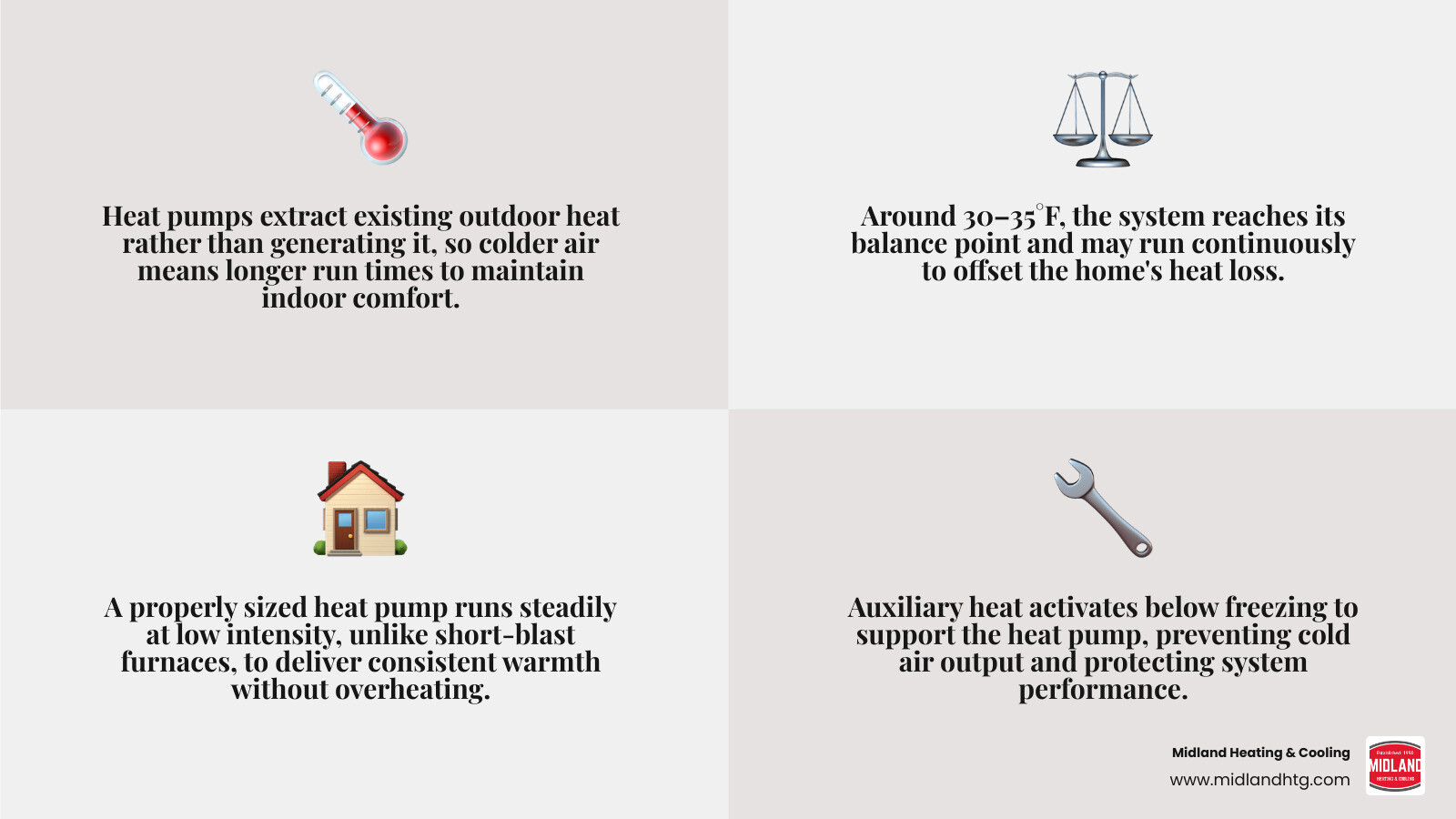
- Heat pumps move heat, they don’t create it. As outdoor temperatures drop, there’s less heat available in the air to extract, so the system has to work longer to deliver the same warmth.
- The “balance point” kicks in. Around 30–35°F, your heat pump reaches the point where it must run continuously just to keep up with your home’s heat loss.
- It’s designed this way. Unlike a gas furnace that blasts heat in short bursts, a heat pump is built to run steadily at lower intensity — like a marathon runner, not a sprinter.
- Auxiliary heat may also activate. Below certain temperatures, backup electric heat strips kick in alongside the heat pump to help maintain your set temperature.
- Constant running only becomes a problem when your home still isn’t warming up, your energy bills spike unexpectedly, or you hear unusual noises.
For Twin Cities homeowners, where winter temperatures can plunge well below zero, a heat pump running non-stop on a January night isn’t a red flag — it’s your system doing exactly what it was built to do. That said, there’s a real difference between a heat pump working hard and a heat pump struggling. Knowing which one you’re dealing with can save you from unnecessary worry — or catch a real problem before it gets worse.
Explore more on how heat pumps move heat better than you’d expect in a Minnesota winter.
Simple guide to why does a heat pump run constantly in cold weather terms:
- heat pump defrost cycle explained for minnesota homeowners
- signs your heat pump needs repair
Why Does a Heat Pump Run Constantly in Cold Weather?

To truly understand why does a heat pump run constantly in cold weather, we have to look at the fundamental difference in operating logic between a traditional fossil-fuel furnace and a modern Heat Pumps system.
Traditional gas or oil furnaces are “sprinters.” When your thermostat calls for heat, the furnace fires up intensely, burns fuel to create high-temperature air (often around 120°F to 140°F), quickly raises the indoor temperature, and then shuts off. This cycle repeats multiple times an hour.
A heat pump, on the other hand, is a “marathon runner.” It does not generate heat through combustion; instead, it uses a closed refrigerant loop to extract existing ambient heat from the outdoor air and transfer it indoors. Because it is transferring heat rather than creating it, the air coming out of your supply vents is typically a gentler, more comfortable 90°F to 105°F. To keep your home cozy, the heat pump is designed to run for much longer periods at a lower, steady intensity.
Heating and cooling make up more than 40% of total home energy use, so efficiency is incredibly important. Fortunately, air-source heat pumps are highly efficient, capable of producing 2 to 4 times more heat energy than the electricity they consume. When a heat pump runs continuously at a low speed (especially variable-speed models running at 25% to 40% capacity), it avoids the massive energy surges associated with starting and stopping a compressor. This steady-state operation can reduce energy use by up to 47%, but only when the system is set up, sized, and cared for correctly.
When outdoor temperatures drop below 30°F, the amount of heat energy available in the freezing air decreases, meaning the heat pump has to work harder and run longer to extract the required BTUs. A heat pump running constantly when it is 22°F outside is completely normal and highly efficient. However, if your heat pump is running constantly when it’s 50°F and sunny outside, that is a clear sign of a system issue.
Understanding the Balance Point and System Sizing
In the HVAC world, we often talk about a concept called the balance point. This is the exact outdoor temperature at which your home’s natural heat loss perfectly matches the maximum heating capacity of your heat pump.
Every home constantly loses heat through its walls, windows, doors, and roof. The colder it is outside, the faster this heat escapes. At the same time, as the outdoor temperature drops, a heat pump’s heating capacity naturally dips.
For most standard homes in the Twin Cities, the balance point typically falls somewhere between 30°F and 35°F. Once the outdoor temperature drops below this balance point, your heat pump must run 100% of the time to offset the heat escaping from your home. If the temperature drops even further, the heat pump alone can no longer maintain your thermostat’s set point, which is when your auxiliary (backup) heating system kicks in to help.
Your home’s insulation and air-sealing quality play a massive role in where this balance point lands. A well-insulated, tightly sealed home in Minneapolis will retain heat far better, lowering the balance point and allowing the heat pump to cycle off periodically even in colder weather. Conversely, an older home with drafty windows and poor attic insulation will have a much higher balance point, forcing the heat pump to run non-stop even in relatively mild winter weather. To learn more about preparing your home for a new system, check out our guide on Factors to consider heat pump installation.
How Sizing Affects Why Does a Heat Pump Run Constantly in Cold Weather
Proper system sizing is critical to ensuring your heat pump operates as intended. During our professional Process of heat pump installation, we perform a rigorous Manual J load calculation to determine the exact heating and cooling needs of your home based on square footage, layout, insulation levels, and local climate.
If a heat pump is undersized for your home, its heating capacity will be too low to ever reach the balance point comfortably. An undersized system will run 24/7 even in mild 45°F weather, struggling to hit your set temperature and causing unnecessary wear and tear on the compressor.
On the flip side, an oversized system is also problematic. While it won’t run constantly, it will “short-cycle” (turn on and off rapidly), which spikes your electric bills, creates uncomfortable temperature swings, and shortens the lifespan of the equipment.
Normal Winter Operation vs. System Malfunctions
Because heat pumps operate so differently from traditional furnaces, it can be difficult for homeowners to distinguish between normal winter behavior and an actual system malfunction. Use this comparison table to help identify whether your heat pump is operating normally or needs professional attention:
| Aspect | Normal Winter Operation | System Malfunction / Warning Sign |
|---|---|---|
| Air Temperature | Gentle, lukewarm air (90°F–105°F) coming from vents. | Truly cold air blowing constantly, causing indoor temperatures to drop. |
| Outdoor Unit Frost | Light, even frost on the outdoor coils that melts away periodically. | The outdoor unit is completely encased in a thick block of ice. |
| Run Time | Continuous, steady running when outdoor temperatures are below 35°F. | Constant running when outdoor temperatures are above 50°F and sunny. |
| System Sounds | Quiet, steady hum (around 50–55 dB) with brief changes during defrost. | Loud grinding, screeching, rattling, or metal-on-metal noises. |
| Thermostat Status | Auxiliary heat (“AUX”) kicks on occasionally to assist during extreme cold snaps. | Auxiliary heat or Emergency Heat (“EM HEAT”) runs constantly, tripling energy bills. |
Two key features of normal winter operation that often confuse homeowners are the defrost cycle and auxiliary heat:
- The Defrost Cycle: When it is cold and humid outside, moisture can freeze on your outdoor unit’s coils. To prevent ice buildup, the heat pump will automatically enter defrost mode every 60 to 90 minutes. During this 10 to 15-minute cycle, the system temporarily reverses into cooling mode to send heat to the outdoor coils and melt the ice. To prevent cold air from blowing into your home during this time, the auxiliary electric heat strips automatically turn on. You might notice a puff of steam from the outdoor unit or hear a brief change in fan noise—this is completely normal!
- Auxiliary and Emergency Heat: Auxiliary heat is a secondary, backup heat source (usually electric resistance coils or a gas furnace) designed to supplement your heat pump when the outdoor temperature drops below the balance point. Emergency heat, however, is a manual thermostat setting that completely disables the heat pump and relies 100% on the expensive backup heat source. You should never switch your thermostat to Emergency Heat unless your heat pump is completely broken and you are waiting for a technician to arrive.
If you are noticing cold drafts, you can read our detailed breakdown on Why is my heat pump blowing cold air in the middle of winter?.
Troubleshooting Why Does a Heat Pump Run Constantly in Cold Weather
If your heat pump is running non-stop and you suspect it isn’t just due to the cold weather, there are several common Common heat pump operating problems that you can investigate:
- Clogged Air Filters: A dirty air filter is the single most common fixable HVAC problem, solving roughly 30 percent of all heating complaints. When a filter is clogged with dust and pet dander, it chokes the airflow through your system. Without enough air flowing over the indoor coils, the system cannot distribute heat effectively, forcing it to run constantly to try and keep up.
- Low Refrigerant Charge: Your heat pump relies on a precise amount of refrigerant to transfer heat. If there is a leak in the line, the low refrigerant level will drastically cut the system’s heating capacity by 30% to 50%. The compressor will run continuously, working overtime to transfer heat that simply isn’t there, which can eventually burn out the compressor motor.
- Frozen Outdoor Coils: If your system’s defrost control board or sensor fails, the outdoor coils will slowly become encased in a thick block of ice. This ice acts as an insulating barrier, preventing the refrigerant from absorbing heat from the outdoor air.
- Blocked Vents and Registers: If furniture, heavy drapes, or closed doors are blocking your return or supply vents, it restricts the air circulation throughout your home, tricking your thermostat into thinking the house is colder than it actually is.
How to Optimize Your Heat Pump for Cold Weather
Maximizing your heat pump’s efficiency and reducing unnecessary wear and tear during a harsh Minnesota winter comes down to smart operational habits and proper system care:
- Set It and Forget It: Unlike traditional gas furnaces, heat pumps do not respond well to large, sudden thermostat adjustments. If you lower your thermostat by 5 degrees at night and crank it back up in the morning, the sudden temperature gap will trigger your highly inefficient, expensive auxiliary electric heat strips to bridge the difference. Instead, find a comfortable winter temperature (we recommend 68°F) and leave it there. If you must adjust the temperature, do so gradually in 1 to 2-degree increments.
- Keep the Outdoor Unit Clear: Your outdoor heat pump unit needs a continuous supply of unrestricted airflow to extract heat. After a heavy Twin Cities snowfall, make sure to clear away snow, ice, and fallen leaves from around the unit. Maintain at least 2 feet of clear space on all sides of the outdoor cabinet.
- Never Use Covers in Winter: While it might seem like a good idea to cover your outdoor unit to protect it from snow, doing so will completely block airflow and prevent the system from operating.
- Invest in Regular Maintenance: Scheduling a professional tune-up each fall is the best way to ensure your system is running at peak efficiency before the winter freeze arrives. Regular inspections allow us to catch low refrigerant levels, failing sensors, and dirty coils before they turn into emergency breakdowns. Learn more about the value of Preventive maintenance for your home comfort systems.
Frequently Asked Questions about Heat Pumps in Cold Weather
Is it normal for a heat pump to run non-stop when it is freezing outside?
Yes, it is completely normal. Once outdoor temperatures drop below freezing (32°F), your home loses heat rapidly, and your heat pump reaches its balance point. To maintain a stable indoor temperature, the system is designed to run continuously at a highly efficient, steady rate rather than cycling on and off.
How does cold weather affect a heat pump’s efficiency?
While a heat pump’s heating capacity and Coefficient of Performance (COP) naturally decrease as outdoor temperatures drop, modern cold-climate heat pumps remain incredibly efficient. Many modern systems can maintain approximately 70% of their heating output at 5°F and remain functional down to -22°F. Even at 0°F with a COP of 2, a heat pump delivers twice as much heat energy as the electricity it consumes, making it cheaper to run than an 85%-efficient oil boiler and saving roughly $2 for every million BTUs of heat produced.
When should I call a professional for a constantly running heat pump?
You should schedule a professional service call if your heat pump is running constantly and you notice any of the following red flags:
- The indoor temperature continues to drop well below your thermostat’s set point.
- The air blowing from your supply vents feels completely cold.
- Your outdoor unit is completely covered in thick ice and the defrost cycle isn’t clearing it.
- Your electric bills spike dramatically without a corresponding drop in outdoor temperatures.
- You hear unusual grinding, squealing, or rattling noises coming from the indoor or outdoor units.
Conclusion
Understanding why does a heat pump run constantly in cold weather can bring a lot of peace of mind during a long, freezing Minnesota winter. In most cases, that continuous hum is simply a sign of a highly efficient system doing exactly what it was designed to do: running a steady marathon to keep your home warm and cozy.
However, if your system is running non-stop but failing to keep your home comfortable, or if you are noticing unusually high energy bills, it’s time to bring in the local experts. At Midland Heating & Cooling, we have been proudly serving Twin Cities homeowners across Minneapolis, St. Paul, Bloomington, Edina, Plymouth, and surrounding areas for over 70 years.
Our family-owned business is built on a foundation of 100% customer satisfaction and certified, highly trained technicians. Whether you need a quick repair, a seasonal tune-up, or a brand-new system, we are here to help.
Keep your system running perfectly all winter long by signing up for our comprehensive HVAC maintenance plan Minneapolis MN, or explore our professional services for Heat Pumps today!