
How Ductless Systems Work with Existing Boiler or Furnace Systems in Twin Cities Homes
Understanding how ductless systems work with existing boiler or furnace systems is the key to making a smart heating and cooling decision for your home. Here is a quick answer:
How ductless systems integrate with a boiler or furnace:
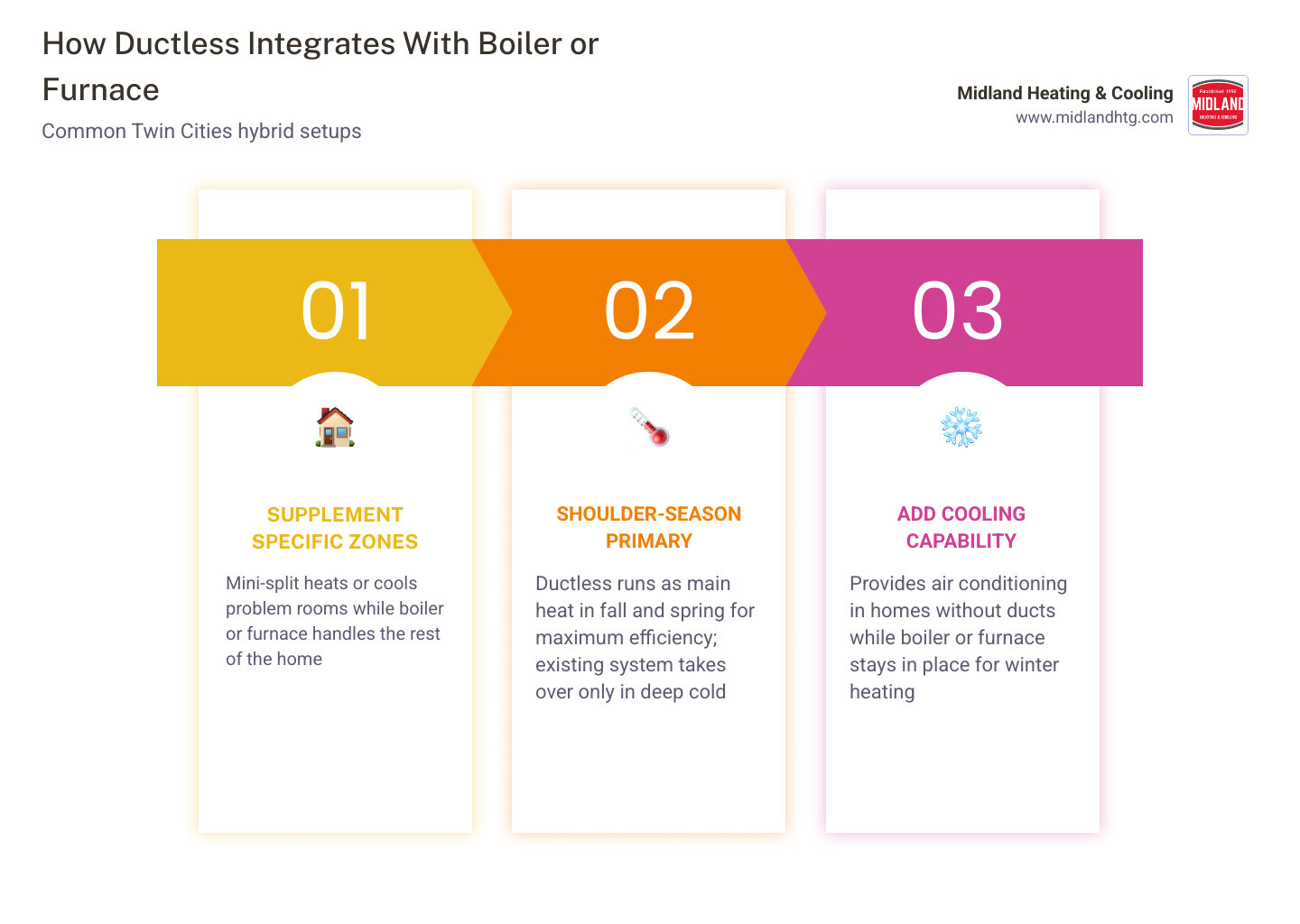
- Supplement, don’t replace (most common) – A ductless mini-split handles specific rooms or zones while your boiler or furnace keeps the rest of the home warm.
- Shoulder-season primary heat – The mini-split runs as the main heat source in fall and spring when it is most efficient, and the boiler or furnace takes over during the coldest winter days.
- Cooling addition – In homes with boilers that have no ductwork, ductless units add air conditioning without any new ducts.
- Automatic switchover – A hybrid setup can be programmed to switch between systems based on outdoor temperature, maximizing efficiency year-round.
- Whole-home electrification – In well-insulated homes with cold-climate-rated equipment, multiple indoor units can handle nearly all heating and cooling needs with the existing system kept as a backup.
If you own an older Twin Cities home heated by a boiler or furnace, you have probably dealt with rooms that are too hot in summer, too cold in winter, or simply impossible to cool without spending a fortune on new ductwork. Many Minneapolis-St. Paul homeowners are in exactly that position — their heating system works fine for winter, but they have no practical way to add comfort for the rest of the year without a major renovation.
That is where ductless mini-split heat pumps come in. These systems connect a small outdoor unit to one or more wall-mounted indoor units using only a narrow set of refrigerant lines through a small hole in the wall. No new ductwork. Minimal disruption. And because they move heat rather than generate it, they can be dramatically more efficient than running your furnace or boiler alone — ENERGY STAR certified models use up to 60% less energy than standard electric heat sources and can cut overall energy consumption by up to 40% compared to conventional systems.
The good news is that you do not have to choose between your existing system and a ductless heat pump. In most Twin Cities homes, the smartest approach is to use both together.
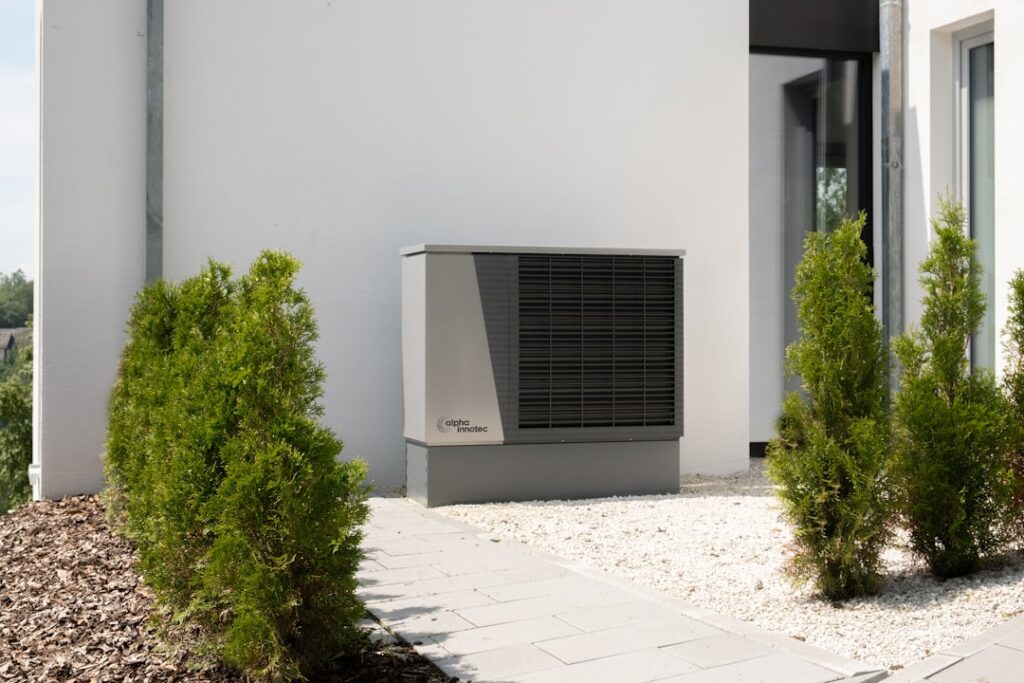
A ductless mini-split heat pump uses refrigerant, an outdoor unit, and one or more indoor heads to move heat in or out of your home. In winter, it pulls heat from outdoor air and delivers it inside. In summer, it reverses and removes indoor heat. Because it uses inverter technology, it can ramp output up or down instead of blasting on and off like an old-school all-or-nothing system.
That matters when you pair it with a boiler or furnace. Your existing boiler still heats water for radiators or baseboard. Your furnace still warms air and sends it through ducts. The ductless system simply handles part of the job, often the rooms where your current setup struggles most.
For more on system options, see our ductless solutions and heat pump services.
The Main Difference Between Ductless Mini-Splits and Boilers or Furnaces
The biggest difference is simple:
- Boilers and furnaces create heat through combustion or electric resistance.
- Ductless heat pumps transfer heat.
That transfer-based approach is why heat pumps can be so efficient. Cold-climate air-source heat pumps can be up to 3 times more efficient than traditional fuel systems under the right conditions.
Other important differences:
| Feature | Ductless Mini-Split Heat Pump | Boiler or Furnace |
|---|---|---|
| Heat delivery | Blows conditioned air directly into a room | Boiler uses radiators/baseboards; furnace uses ducts |
| Cooling | Yes | Boiler: no, Furnace: only with separate AC |
| Zoning | Excellent, room by room | Usually limited unless special zoning is added |
| Ductwork needed | No | Furnace uses ducts; boiler does not |
| Efficiency losses | No duct losses | Furnaces can lose efficiency through leaky ducts |
| Domestic hot water | No | Some boilers may support water heating indirectly |
| Comfort style | Fast response, air movement | Radiant or whole-home central heat feel |
Mini-splits also shine when homeowners want zone control benefits or need help solving airflow problems with ductless AC.
Common Integration Setups Homeowners Use
Most homes do not need a dramatic all-or-nothing switch. Common setups include:
- Cooling-only addition for homes with radiators and no AC
- Supplemental heating in upstairs bedrooms, additions, finished basements, or sunrooms
- Partial-home retrofit where a few indoor units cover hard-to-condition areas
- Hybrid heating where the mini-split handles mild weather and the boiler or furnace handles deep winter
- Near-whole-home heat pump coverage with the old system retained as backup
This is especially useful in older Twin Cities homes where extending ducts is messy, expensive, or just plain unrealistic. If that sounds familiar, our guides on ductless AC systems for older homes and why your century home might prefer a mini split over new ducts are worth a read.
How Ductless Systems Work with Existing Boiler or Furnace Systems in Daily Operation
In day-to-day use, hybrid systems are usually run one of two ways:
- Manual changeover: you decide when to use the mini-split versus the boiler or furnace
- Automatic switchover: controls switch systems based on outdoor temperature or programmed settings
A common strategy is to let the mini-split do most of the work in spring and fall, then rely more on the boiler or furnace during the coldest stretches. This temperature threshold is often called the balance point.
A few operating tips matter:
- Keep steady setpoints instead of making constant big changes
- Make sure all connected indoor heads run in the same mode at the same time
- Use the mini-split consistently rather than treating it like a window unit you only remember on Tuesdays
When a Ductless System Should Supplement vs Replace Your Existing Heat
Whether a ductless system should supplement or replace your current heat depends on the house, not just the equipment. Layout, insulation, electric capacity, winter comfort expectations, and whether your boiler also handles hot water all affect the answer.
If your current heating system is aging, these resources can help you evaluate next steps:
- Furnace replacement in Minneapolis
- When to consider furnace replacement
- When to consider boiler replacement
Best Cases for Keeping the Boiler or Furnace as Backup
In the Twin Cities, backup heat often makes very good sense. We usually recommend keeping the existing system available when:
- The home is older and leaks heat quickly
- You have steam radiators or high-temperature hydronic heat
- The house has a long heating season and sees subzero cold snaps
- You prefer the feel of radiator heat in deep winter
- Your boiler also supports domestic hot water
- You want another heating option for resilience and comfort planning
Boilers are especially hard to replace one-for-one in homes built around radiant comfort. A mini-split can heat effectively, but it feels different because it delivers warm air, not the same floor-level radiant warmth.
When Ductless Can Handle Most or All of the Heating Load
A ductless system may be able to carry most or all of the heating load if:
- The home is air sealed and well insulated
- A room-by-room load calculation has been done
- The equipment is cold-climate rated
- Indoor units are properly distributed throughout the home
- The home has relatively low heat loss
- The homeowner is comfortable keeping backup heat mainly for extreme weather
Modern cold-climate systems are impressive. Some are tested for low-temperature performance well below freezing, and some maintain strong output even around 5 degrees Fahrenheit. But “can heat” and “should be your only heat” are not always the same thing in Minnesota. Design matters.
How Ductless Systems Work with Existing Boiler or Furnace Systems in Twin Cities Winters
Yes, ductless systems work below freezing. That is one of the biggest homeowner questions, and the answer is a clear yes. But capacity and efficiency can drop as temperatures fall, especially during severe cold.
In Twin Cities winters, expect these realities:
- The mini-split may still heat efficiently in cold weather
- It will periodically enter defrost mode to clear ice from the outdoor coil
- Output can decline in very low temperatures
- Reliable backup is smart during subzero stretches
That is why hybrid design is so popular here. The mini-split does the efficient heavy lifting in milder cold, and the boiler or furnace stands ready for the nastiest January weather. Minnesota likes to remind us who is boss.
Benefits and Tradeoffs of a Hybrid Ductless Plus Boiler or Furnace System
A hybrid system lets each piece of equipment do what it does best.
Benefits often include:
- Zoned heating and cooling
- Better comfort in rooms with uneven temperatures
- Lower fuel use
- Added air conditioning in homes without ducts
- Quiet operation
- Less dependence on a single system
Many ductless indoor units operate very quietly, and some outdoor units are around conversation-level sound. They are often quieter than traditional ducted systems.
You can also learn more about temperature inconsistencies with ductless AC.
Comfort Benefits: Zoned Heating and Cooling for Problem Areas
This is where ductless really earns its keep.
It is ideal for:
- Hot upstairs bedrooms
- Cold basements
- Four-season porches
- Home offices
- Finished attics
- Additions that never seem to match the rest of the house
Each indoor unit has its own temperature control, so you do not have to overheat the whole house just to make one office comfortable. That can be a major upgrade if you have one room that is always fighting the rest of the house.
Drawbacks to Plan For Before You Install
Ductless is not magic. It is excellent technology, but it still comes with tradeoffs:
- Wall-mounted units are visible
- Ceiling cassettes or floor consoles may be better in some rooms
- Line sets and condensate drains need a route
- Outdoor units must be kept clear of snow and debris
- Some homeowners notice the feel of moving air more than they do with radiators
- Most multi-zone systems require all indoor units to be in the same mode at once
For some households, aesthetics matter as much as performance. That is normal. The best design is one you will actually like living with.
Domestic Hot Water, Radiators, and Other System Limitations
This part is important and often overlooked: a ductless mini-split does not make domestic hot water.
So if your current boiler also supports an indirect water heater or domestic hot water in some way, replacing it may require a separate plan for hot water.
Other limitations to think through:
- Steam radiator systems are usually better kept as backup or primary winter heat
- Radiator lovers may miss the even, gentle feel of radiant warmth
- Ductless heads heat the air in the room, not the water in your radiators
What Installation Looks Like in Homes With Radiators or Existing Ductwork
Good installation starts with a real assessment, not guesswork.
That includes:
- Room-by-room load calculations
- Placement planning for indoor units
- Outdoor unit location
- Electrical review
- Condensate drainage planning
- Refrigerant line routing
- Startup and commissioning
For background, see our guides on the process of heat pump installation, process heat pump installation, and HVAC terminology.
Adding Ductless to a Home With Radiators or Boiler Heat
This is one of the best use cases for ductless.
In homes with radiators:
- No new ductwork is required
- Refrigerant lines can often run through basements, closets, or utility chases
- Wall patching is usually limited
- Older plaster homes can often be retrofitted with less disruption than a full duct install
That is why ductless is often a strong fit for older Minneapolis and St. Paul homes. Related reading:
- Ductless AC systems for older homes
- Ductless AC systems in older homes
- Why your century home might prefer a mini split over new ducts
Adding Ductless to a Home That Already Has a Furnace and Ductwork
Even homes with ductwork can benefit from ductless.
Why? Because ducts are not always where you need them, and some rooms are still stubborn. Common examples:
- Bonus rooms over garages
- Second-floor bedrooms
- Additions added after the original HVAC system
- Rooms at the end of long duct runs
In those situations, a ductless unit can target the problem area directly and reduce how hard the furnace has to work.
Placement Tips for Performance, Noise, and Aesthetics
Placement matters more than many homeowners expect.
Indoor unit tips:
- Aim for clear airflow across the room
- Avoid placing units directly above beds or dining tables when possible
- Consider low-wall units or cassettes if a wall head would be visually awkward
- Match unit type to room shape and use
Outdoor unit tips:
- Keep it above expected snow levels or in a protected location
- Allow room for airflow and service access
- Think about where defrost water will drain
- Avoid locations where ice or water could create a walkway hazard
If you are comparing room layouts, our guide to choosing a ductless AC system can help.
Efficiency, Maintenance, Incentives, and FAQ
One reason homeowners explore hybrid systems is efficiency. Heating and cooling account for nearly half of a typical household energy bill, and ductless heat pumps avoid the duct losses that can drag central systems down.
Research consistently shows that ductless systems can reduce energy use significantly, including up to 40% versus conventional systems in some applications. ENERGY STAR certified mini-splits can also use up to 60% less energy than standard electric radiators.
For broader home comfort information, visit our HVAC page.
Efficiency and Maintenance Differences Homeowners Should Expect
Efficiency is usually described with ratings like SEER2 for cooling and HSPF2 for heating. Higher numbers generally mean better seasonal efficiency, but proper sizing and installation matter just as much.
Compared with traditional systems, expect these maintenance differences:
- Ductless filters need regular washing or cleaning
- Outdoor units should be kept free of leaves, debris, and snow
- Professional annual service is still important
- Coils, drain lines, and electrical connections need inspection
The maintenance routine is not difficult, but it is different from simply changing a furnace filter and forgetting the rest exists.
Incentives and Rebates Available for Ductless Heat Pumps
In 2026, homeowners may still have access to federal tax credits and utility incentives for qualifying heat pump installations. Eligibility often depends on:
- ENERGY STAR certification
- Cold-climate performance
- Proper installation
- Timely paperwork and documentation
Because programs change, it is smart to verify current requirements before installation so nothing gets missed.
Frequently Asked Questions About How Ductless Systems Work with Existing Boiler or Furnace Systems
Can a ductless mini-split fully replace my boiler or furnace?
Sometimes, yes. But not always, and not automatically.
A full replacement works best in a well-insulated home with proper room-by-room design and cold-climate equipment. In many Twin Cities homes, especially older ones, keeping the boiler or furnace as backup is the more practical path.
Do ductless systems still work below freezing?
Yes. Modern cold-climate ductless systems can provide reliable heating below freezing. However, as outdoor temperatures drop, heating output can decline and defrost cycles become more noticeable. That is exactly why backup heat remains valuable in Minnesota.
Will ductless help rooms that never feel comfortable?
Usually, yes. Ductless systems are excellent for uneven temperatures, airflow issues, and hard-to-condition spaces because they condition the room directly instead of hoping the rest of the system somehow figures it out.
If that is your main issue, these articles may help:
- Ductless AC not cooling evenly
- Resolve uneven cooling with ductless systems
- Why ductless AC struggle in large rooms
Conclusion
For many Twin Cities homeowners, the best answer is not boiler or furnace versus ductless. It is boiler or furnace plus ductless.
That hybrid approach can give you cooling where you never had it, better comfort in the rooms that always misbehave, lower energy use in the right conditions, and dependable backup heat when Minnesota winter does its annual audition for “most dramatic season.”
At Midland Heating & Cooling, we help homeowners across Minneapolis, St. Paul, St. Louis Park, Edina, Eden Prairie, Minnetonka, Hopkins, Bloomington, Wayzata, and Excelsior figure out the right balance between comfort, efficiency, and reliability. If you are exploring a retrofit, replacement plan, or a targeted fix for a problem room, start with our ductless page.