

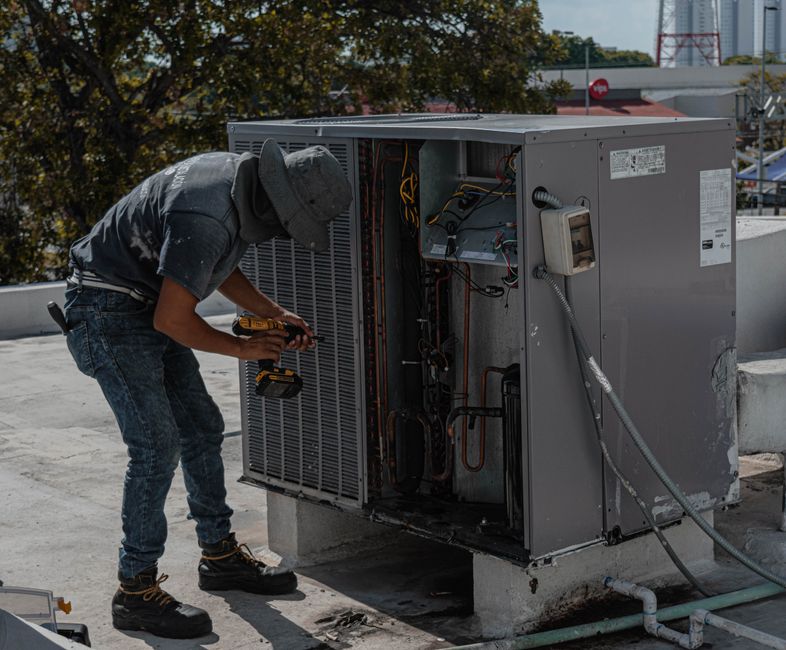
Why Upper Midwest Homeowners Face More AC Repairs Than Most
The most common air conditioner repairs in the upper midwest include clogged air filters, frozen evaporator coils, refrigerant leaks, failed capacitors, compressor problems, and drainage issues. Here’s a quick look at each:
- Clogged air filter – The top cause of poor cooling and restricted airflow
- Frozen evaporator coils – Caused by low refrigerant or blocked airflow, common in Minnesota and Wisconsin
- Refrigerant leaks – Lead to warm air from vents and ice buildup on the unit
- Capacitor failure – Causes the AC to hum but not start, especially in older systems
- Compressor failure – The most expensive repair, often signaling time to replace the unit
- Drainage clogs – High summer humidity creates excess condensation that backs up in drain lines
- Tripped breakers or electrical faults – Power fluctuations and aging wiring are frequent culprits
If you live in Minnesota, Wisconsin, or anywhere in the Twin Cities metro, you already know the weather here plays by its own rules. Winters push deep below zero. Summers arrive fast, with humidity that hits hard. And in between, there are weeks where temperatures swing 40 degrees in a matter of days.
That kind of climate is tough on air conditioning systems. Your AC sits idle for six or seven months every year, then gets asked to work hard the moment summer arrives. It’s no surprise that breakdowns happen — often on the hottest day of the year, when you need cool air most.
Understanding what tends to go wrong, and why, helps you catch problems early and avoid the most stressful (and costly) surprises.

How the Upper Midwest Climate Triggers the Most Common Air Conditioner Repairs in the Upper Midwest
Our weather in the Twin Cities is a study in extremes. We experience some of the most dramatic seasonal transitions in the country, swinging from bone-chilling sub-zero winters to sweltering, sticky summers. While we are busy enjoying the lakes in July, our air conditioners are working overtime to combat high humidity and intense heat. This dramatic shift places unique stresses on cooling equipment that homeowners in milder climates simply don’t have to worry about.
Several key climate factors contribute directly to system wear and tear:
- Extreme Winter Hibernation: Because our air conditioners sit completely idle for more than half the year, mechanical parts can seize, electrical connections can corrode, and pests can nest inside the outdoor condenser unit. When you flip the switch in late spring, the sudden demand can shock an unmaintained system.
- High Summer Humidity: The Upper Midwest is notorious for heavy, humid summer air. Your AC doesn’t just cool your home; it acts as a massive dehumidifier. When humidity levels skyrocket, the system has to work twice as hard to extract moisture from the air, putting immense strain on the blower motor and condensate drain lines. High humidity can also lead to AC Thermostat Problems In Humid Weather, where moisture interferes with sensitive electronics and causes inaccurate temperature readings.
- Rapid Temperature Swings: Spring and autumn in areas like Minneapolis, St. Paul, and Edina often bring wild temperature fluctuations. Running your heater one night and your air conditioner the next afternoon forces components to expand and contract rapidly, which can weaken joints and lead to refrigerant leaks.
- Seasonal Debris and Cottonwood Seeds: If you live near Minnetonka, Wayzata, or Eden Prairie, you know that late spring brings a heavy blanket of cottonwood seeds and pollen. These fluffy seeds act like a blanket, wrapping around your outdoor condenser coils. This blocks heat transfer, causes the compressor to run dangerously hot, and eventually triggers system failure.
Airflow, Coil, and Refrigerant Issues in Cold Climates
To understand why your air conditioner might be struggling, it helps to look at the relationship between airflow, the evaporator coil, and the refrigerant flowing through your system. When these three elements are not perfectly balanced, you will quickly find yourself asking: Why Is AC Not Cooling Properly?

In our cold-climate region, a very common call we receive is for AC Freezing Up During Hot Summer Days. It sounds counterintuitive—how can an air conditioner freeze when it is 90 degrees outside?
It happens because the refrigerant inside the indoor evaporator coil needs a constant flow of warm indoor air passing over it to absorb heat. If the airflow is restricted, or if the refrigerant level is low, the temperature of the coil drops below freezing. The moisture extracted from your humid indoor air then freezes instantly on the coil, turning it into a solid block of ice.
To help you diagnose what might be happening with your system, here is a quick comparison of low refrigerant signs versus restricted airflow symptoms:
| Symptom | Low Refrigerant | Restricted Airflow (Dirty Coils/Filters) |
|---|---|---|
| Air Temperature from Vents | Warm or barely cool air | Weak, faint stream of cool air |
| Physical Signs on Unit | Ice on the outdoor brass valves and indoor coil | Ice localized primarily on the indoor evaporator coil |
| System Sounds | Hissing or bubbling noises | Loud humming, whistling, or strained blower motor |
| Energy Bills | Sharp, continuous increase | Gradual increase over the season |
| System Behavior | Runs constantly without cooling | Cycles on and off rapidly (short cycling) |
If you suspect a leak, it is crucial to seek a professional diagnosis. Be sure to look for the Signs AC Refrigerant Needs Inspection before the problem escalates and ruins your compressor.
Airflow Restrictions and the Most Common Air Conditioner Repairs in the Upper Midwest
Airflow is the lifeblood of your HVAC system. When airflow is blocked, the entire system suffocates. The single most common culprit behind poor cooling performance and avoidable service calls is a simple, clogged air filter.
When a filter is packed with dust, pet dander, and local allergens, the blower motor must work significantly harder to pull air through it. This extra strain can cause the blower motor to overheat and burn out. Furthermore, restricted airflow prevents the system from distributing cool air evenly, leaving you with hot and cold spots throughout your home. If you are trying to figure out why some rooms are comfortable while others are stifling, check out The My House Is Still Hot AC Troubleshooting Guide for step-by-step help.
Beyond dirty filters, airflow can be restricted by:
- Blocked Return Vents: Furniture, heavy drapes, or rugs blocking return air grilles.
- Leaky or Collapsed Ductwork: Especially in older homes in St. Paul or Hopkins, where duct joints can separate over time.
- Dirty Evaporator Coils: Dust that bypasses a cheap or neglected filter coats the moist coils, creating an insulating barrier that prevents heat absorption.
When airflow is restricted, the pressure inside your refrigerant lines drops, which can mimic the symptoms of a leak. However, if the issue truly is a leak, a technician will need to find the source, seal it, and Address Low Refrigerant Issues In AC System safely and legally. If your system is blowing nothing but warm air, you can learn more about immediate troubleshooting steps by reading How To Fix AC Blowing Warm Air.
Electrical and Mechanical Breakdowns in AC Systems
Because our summer cooling season is relatively short but highly intense, air conditioners in the Twin Cities experience concentrated mechanical and electrical stress. When the heat waves roll in across Bloomington, St. Louis Park, and Excelsior, systems run continuously for days on end. This constant operation is when electrical components are most likely to fail.
The most common electrical failure we encounter is a bad capacitor. The capacitor acts like a heavy-duty battery that gives your AC motor the high-voltage push it needs to start running. Over time, heat, electrical surges, and constant use degrade capacitors, causing them to bulge or leak. If you hear a loud humming sound coming from your outdoor unit but the fan isn’t spinning, a dead capacitor is almost always the cause.
Another common electrical frustration is a tripped circuit breaker. If your system shuts down completely, you should check your main electrical panel. However, if you reset the breaker and it immediately trips again, do not force it. This is a safety mechanism indicating a severe electrical short, a failing compressor, or a grounded motor. To understand why this happens, read our guide on Why AC Circuit Breaker Keeps Tripping.
The compressor is the heart of your air conditioner, pumping refrigerant between the indoor and outdoor units. Because it is under high pressure, it is highly sensitive to electrical issues and poor maintenance. Running your AC with clogged coils, restricted airflow, or low refrigerant forces the compressor to work at dangerously high temperatures, eventually leading to terminal failure. Learn how to spot the warning signs early by reading about AC Compressor Failures In Summer.
Electrical Faults and the Most Common Air Conditioner Repairs in the Upper Midwest
In addition to capacitors, your AC relies on contactors—essentially electrical switches that control the flow of power to the compressor and fan motor. Because these switches physically open and close every time your system cycles, they can wear out, become pitted, or even get stuck together by small insects seeking warmth.
When electrical components begin to fail, they often give off warning signs. You might hear strange noises coming from your outdoor unit. If you are noticing unusual sounds, you can consult this helpful guide on What To Do When AC Makes Strange Noises. Specific sounds can tell you a lot; for instance, a failing contactor or capacitor often produces a distinct hum, which you can learn more about in Reasons AC Is Making Buzzing Sound.
Electrical faults can also cause your system to start “short cycling”—turning on and off rapidly every few minutes. This behavior places extreme wear on the compressor and dramatically increases your energy consumption. If your system is acting up in this way, explore our resource on Troubleshooting AC Short Cycling to find out what is causing the erratic behavior.
Frequently Asked Questions About Upper Midwest AC Issues
We understand that dealing with a malfunctioning air conditioner can be stressful and confusing. Here are some of the most common questions we hear from homeowners in Minneapolis, St. Paul, and the surrounding suburbs.
Should I turn off my AC if it is running constantly but not cooling?
Yes, absolutely. If your air conditioner is running non-stop but your home’s temperature is not dropping, you should turn the system off at the thermostat immediately.
When an AC runs constantly without cooling, it is usually because of a frozen evaporator coil or a severe refrigerant leak. Continuing to run a system in this state places immense stress on the compressor. The compressor relies on the returning cool refrigerant to keep itself from overheating; without it, the compressor can quickly burn out.
Running a compromised system can turn a simple, easily fixable issue into an expensive replacement. If you are experiencing this exact problem, read our detailed article on AC Running Constantly Without Cooling Properly to learn what steps you should take next.
Why does my air conditioner smell musty after running for hours?
A musty odor coming from your vents is a direct result of our high Upper Midwest summer humidity. As your AC pulls moisture from the air, that water drips into a condensate drain pan and flows out through a drain line.
If the drain pan is pitched incorrectly, or if the drain line becomes clogged with algae, mold, and dust, water will pool inside your HVAC system. In the dark, warm interior of your system, this standing water quickly becomes a breeding ground for mold and mildew. When the fan blows, it carries those musty spores directly into your living spaces.
To prevent water damage to your home and protect your indoor air quality, it is important to resolve this quickly. If you notice water pooling around your furnace or indoor AC unit, check out how to Address Water Leaking From AC Unit. To dive deeper into why these odors develop and how to eliminate them, read AC Smell Musty After Running For Hours.
When should I repair versus replace my air conditioner?
Deciding whether to patch up an aging air conditioner or invest in a brand-new system is a major decision for any homeowner. In the HVAC industry, we often use the “5,000 Rule” as a helpful starting point.
To use this rule, multiply the age of your air conditioner (in years) by the estimated cost of the repair. If the result is greater than 5,000, replacing the unit is generally the smarter, more cost-effective long-term choice. For example:
- A 6-year-old system with a minor electrical repair easily warrants a repair.
- A 13-year-old system facing a major mechanical failure is a prime candidate for replacement.
Most central air conditioning systems in Minnesota have a lifespan of 10 to 15 years. Beyond this age, multiple internal components often begin failing at the same time, and older units still utilizing R-22 refrigerant become incredibly expensive to service due to environmental phase-outs. If your system is constantly turning on and off or showing signs of unpredictable behavior, read Why Your AC Is Acting Like A Light Switch And How To Fix It to help weigh your options.
Conclusion
Your home’s air conditioner is a complex mechanical system that operates under demanding conditions here in the Upper Midwest. From the dusty, cottonwood-heavy days of early June to the high-humidity stretches of late August, your system works hard to keep your family safe and comfortable.
While some minor issues like replacing a dirty air filter can be handled on your own, most mechanical, electrical, and refrigerant problems require the specialized tools and expertise of a professional. Attempting to repair electrical components or handling refrigerant without proper certification is dangerous and can void your equipment’s warranty.
At Midland Heating & Cooling, we have spent more than 70 years helping homeowners throughout the Twin Cities—including Minneapolis, St. Paul, St. Louis Park, Edina, Minnetonka, and beyond—stay comfortable in every season. Our family-owned business is built on certified technicians, 100% customer satisfaction, and deep roots in our local communities.
The best way to avoid emergency breakdowns on a sweltering July afternoon is to schedule a professional spring tune-up. If your system is already showing signs of struggle, making strange sounds, or blowing warm air, don’t wait for it to stop working entirely. Contact us today to schedule your professional AC Repair and ensure your home stays cool and comfortable all summer long.